Inquiry
Form loading...

2026 Top Planetarium Dome Types for Global Buyers?

Choosing among the 2026 top planetarium dome types requires more than comparing attractive renderings or projector specifications. Global buyers must examine dome geometry, projection method, acoustic behavior, maintenance access, and local operating conditions. A Planetarium Dome may look impressive in a showroom, yet perform poorly if its surface reflects stray light or amplifies audience noise. Practical evaluation begins with the venue itself: ceiling height, seating capacity, climate control, delivery routes, and available technical staff.

Common options include fixed aluminum-panel domes, inflatable domes, modular portable structures, and hybrid projection environments. Fixed domes often provide stable geometry for museums, universities, and science centers. Inflatable models can serve schools, touring programs, and temporary exhibitions, although fan noise and fabric maintenance require attention. Modular systems offer useful flexibility, but repeated assembly may affect alignment over time. Small details matter. A misaligned projector can weaken an otherwise excellent presentation.

This guide compares these dome types through an experience-based lens. It considers installation demands, image quality, durability, visitor comfort, and long-term ownership costs. No single design suits every market. That assumption deserves caution. Supplier credentials, documented testing, warranty terms, replacement-part access, and trained support teams should influence the final decision. Buyers should also request a live demonstration, inspect seams and joints, and review performance data under realistic lighting conditions. Some recommendations may change as display technology develops, so careful reassessment remains necessary before signing a purchase agreement.

2026 Top Planetarium Dome Types for Global Buyers?

Planetarium Dome Types and Their Core Structural Differences

Planetarium dome types differ mainly in their structural behavior, not only in appearance. Rigid domes use steel, aluminum, or reinforced panels to create a stable hemispherical shell. They resist wind, vibration, and long-term deformation well. Their smooth inner surfaces also support precise projection. However, construction is slower and foundation requirements are usually higher.

Inflatable domes rely on continuous air pressure. They are lightweight, portable, and suitable for schools, exhibitions, and temporary venues. Their seams, fans, and fabric tension require regular inspection. Fan noise can affect narration, while slight surface movement may reduce image sharpness.

Tensioned fabric domes offer another balance. A stretched membrane over a frame reduces weight and installation time. Modular geodesic structures provide stronger geometry, but their joints may create visual or acoustic complications.

A rigid dome is not always the best choice. The right structure depends on climate, transport access, audience capacity, projection equipment, and local building requirements. Professional site surveys remain essential, even when the project appears simple.

Tips: Ask for wind-load data, fire-performance documents, acoustic tests, and maintenance procedures. Check the dome’s internal radius before selecting projection equipment. Leave service access around fans, lighting, and control systems.

Field experience shows that many problems begin with underestimated ventilation or poor drainage. That detail is easy to miss. A careful buyer should also compare total ownership costs, not just the quoted purchase price. Some inflatable systems seem economical initially, but replacement fabric and continuous power may change the calculation. Structural decisions deserve a second review.

How to Compare Projection Systems, Materials, and Viewing Quality

2026 Top Planetarium Dome Types for Global Buyers?

A 2024 planetarium market analysis forecasts roughly 6% annual growth through 2030. This expansion increases pressure to choose carefully. Buyers should compare projection systems, dome materials, and maintenance access together. A multi-projector setup usually delivers smoother coverage across large surfaces. Single-projector systems can reduce installation costs, but edge brightness may suffer. Measure it.

Viewing quality depends on more than resolution. Check native contrast, black-level performance, color uniformity, frame synchronization, and visible seams. The Society of Motion Picture and Television Engineers identifies calibration and viewing geometry as essential image-quality controls.

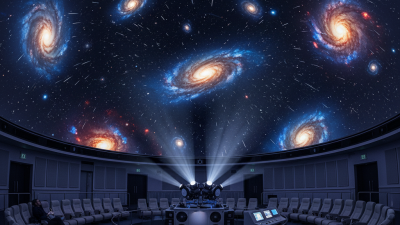
A darker, well-calibrated dome can appear sharper than a brighter system with poor uniformity. That difference becomes obvious beside a simulated Moon or thin Milky Way detail.

Dome materials also shape the experience. Perforated aluminum supports airflow and structural durability, while molded composite panels can provide smoother surfaces. Fabric systems are lighter, but tension and aging require closer inspection. Ask for measured luminance at the center, horizon, and sidewall, not one showroom number. Grand View Research’s 2024 market report highlights digital immersive systems as major growth drivers, yet market growth does not guarantee suitability. I would not pretend there is one perfect dome. Dust, humidity, audience size, and local service skills can change the decision. Test real content, including slow star fields and bright planetary scenes. Small flaws become large overhead.

Top Planetarium Dome Options for Schools, Museums, and Commercial Venues

For schools, museums, and commercial venues, the best planetarium dome depends on audience, room size, and operating frequency. A fixed projection dome suits permanent education spaces. Its rigid shell supports accurate geometry, controlled acoustics, and stable projector alignment. Schools can use it for astronomy lessons, while museums may add guided storytelling and scientific visualization. A well-designed 8–12 meter dome can seat a class comfortably without overwhelming younger visitors.

Portable inflatable domes offer flexibility. They can serve different classrooms, community halls, or traveling exhibitions. Setup is faster, and storage is simpler. However, fans create background noise, and the fabric surface may reduce image sharpness. Operators should test ventilation, emergency access, brightness, and sound levels before public use. A darker room is still essential.

Commercial venues often consider immersive LED or hybrid domes. LED systems deliver strong contrast, vivid colors, and reliable performance in spaces with limited light control. Hybrid designs combine projection with architectural flexibility, which can support films, events, and interactive exhibits. Yet higher image quality does not automatically create better learning. Content, seating angles, calibration, and staff training remain critical. A perfect dome does not exist. Even experienced teams may underestimate maintenance time or visitor flow. Reviewing real demonstrations, service records, and accessibility details can prevent expensive surprises.

2026 Top Planetarium Dome Types for Global Buyers – Top Planetarium Dome Options for Schools, Museums, and Commercial Venues

Planetarium Dome Type Typical Diameter Range Recommended Venue Installation Profile Projection Compatibility Key Advantages Main Limitations Maintenance Considerations Best Use Rating
Inflatable Portable Dome Approximately 4–10 m Schools, libraries, outreach programs, temporary exhibitions Rapid deployment on a level indoor floor; requires an air blower and suitable ventilation Portable digital projection systems; short-throw or fisheye configurations depending on the design Highly portable, comparatively low infrastructure requirements, quick setup, and suitable for touring education programs Limited internal space, continuous blower noise, fabric light leakage, and sensitivity to sharp objects or excessive humidity Regular fabric cleaning, blower-filter inspection, seam checks, and controlled storage when not in use ★★★★★ Education
Fixed Seamless Projection Dome Approximately 8–25 m Museums, science centers, universities, permanent visitor attractions Permanent architectural installation with a rigid or semi-rigid projection surface and dedicated technical room Digital fulldome projection; multi-projector systems are commonly used for larger viewing areas Immersive image quality, controlled acoustics, professional audience capacity, and strong suitability for scheduled programming Higher construction cost, longer project planning, fixed location, and greater HVAC and electrical requirements Periodic surface calibration, projector maintenance, alignment checks, acoustic inspection, and HVAC servicing ★★★★★ Professional
Geodesic Dome Approximately 8–30 m Outdoor science events, cultural venues, resorts, festivals, multipurpose attractions Built from interconnected structural members with a separate interior projection surface or integrated cladding Digital projection; system selection depends on the interior surface geometry and dome diameter Strong structural efficiency, distinctive architecture, flexible venue design, and potential for semi-permanent or permanent use Interior seams or structural elements may affect image uniformity; acoustic treatment and weather protection require careful planning Inspection of joints, structural connections, waterproofing, interior screen condition, and environmental controls ★★★★☆ Flexible
Tensioned Fabric Dome Approximately 6–20 m Schools, museums, commercial experience centers, temporary or semi-permanent installations Fabric membrane stretched over a supporting frame; generally lighter than a conventional rigid building shell Digital projection systems, including single-projector and multi-projector layouts selected according to the dome geometry Clean interior appearance, relatively light structure, adaptable dimensions, and good balance between portability and permanence Fabric tension must remain consistent; surface brightness and image quality depend strongly on material selection and installation accuracy Fabric tension checks, dust control, frame inspection, projector calibration, and replacement planning for worn membrane sections ★★★★☆ Adaptable
Rigid Fiberglass or Composite Dome Approximately 5–15 m Classrooms, museums, training centers, compact commercial attractions Permanent or modular installation using prefabricated rigid panels with a dedicated interior projection finish Digital fulldome projection; compact systems can support educational programs and small-group presentations Durable surface, repeatable geometry, reduced movement after installation, and relatively consistent image alignment Panel joints require careful finishing; transport and access can be difficult for larger sections; expansion options may be limited Cleaning with approved non-abrasive materials, joint inspection, surface-refinish assessment, and projector servicing ★★★★☆ Durable
Hybrid Dome with Retractable or Convertible Interior Approximately 10–25 m Commercial venues, museums, conference centers, multipurpose entertainment spaces Permanent venue with a dome system that can be covered, reconfigured, or integrated with other event functions Digital fulldome projection combined with conventional lighting, media servers, or flat-screen presentation systems Supports astronomy shows, films, live events, presentations, and revenue-generating programs in one venue Complex engineering, higher purchase and operating costs, longer commissioning period, and more demanding operator training Scheduled inspection of moving components, control systems, projection equipment, acoustic systems, and safety interlocks ★★★★★ Commercial
Digital Immersive Room with Domed Ceiling Approximately 6–18 m equivalent viewing span Urban museums, schools with limited floor area, branded learning and entertainment venues Interior room conversion using a curved or segmented ceiling, projection surfaces, and integrated media infrastructure Digital projection, LED-based systems, or mixed display solutions depending on the room design and budget Efficient use of existing buildings, flexible content delivery, and integration with interactive or mixed-reality experiences May not provide a mathematically continuous hemispherical surface; room geometry can create projection and sound challenges Media-server updates, display calibration, ventilation checks, cable management, and regular software support ★★★★☆ Urban
Planning note: Diameter ranges are indicative industry planning ranges rather than fixed standards. Final selection should consider audience capacity, ceiling height, fire and building regulations, accessibility, acoustic treatment, projector throw distance, content format, energy supply, climate control, and local installation requirements.

Key Buying Factors: Size, Installation, Maintenance, and Budget

2026 Top Planetarium Dome Types for Global Buyers

Planetarium buyers can choose fixed, inflatable, portable, or hybrid domes. Each type serves a different operating environment. Fixed domes provide strong acoustics, stable projection, and long service life. Inflatable domes usually reduce construction time and suit schools, museums, and touring programs. Portable models need careful packing, transport planning, and repeated assembly checks. Measure twice.

Dome size affects audience capacity, projector placement, ventilation, and emergency access. A 6-meter dome may fit a classroom, while a 20-meter structure requires stronger foundations and professional installation. Installation costs often include rigging, electrical work, acoustic treatment, calibration, and local safety inspections. Do not judge by equipment prices alone.

Maintenance also needs scheduled cleaning, seam inspection, projector calibration, lamp or laser servicing, and software updates. Humidity and dust can shorten component life, especially in tropical or desert regions. A low quote can be misleading.

Tips: Request a complete lifecycle budget before ordering. Separate the costs for shipping, installation, training, spare parts, insurance, and annual service. Ask for written load limits and climate requirements. Keep critical spares on site. Review the maintenance plan with a qualified technician. Some buyers focus heavily on visual impact and overlook visitor flow or staff training. That mistake is understandable, but expensive to correct later. A smaller dome with reliable access may outperform a larger dome that is difficult to operate.

Global Compliance, Supplier Evaluation, and 2026 Market Trends

In 2026, planetarium buyers will compare dome types through compliance, not appearance alone.
Fixed aluminum domes suit permanent science centers and tolerate frequent projection cycles. Fiberglass panels can reduce installation time, but surface aging requires careful inspection. Inflatable domes remain practical for schools and touring exhibitions. They need stable anchoring, fire-performance documentation, and controlled ventilation. Dome choice should match audience capacity, climate, transport limits, and maintenance skills.

Global compliance begins with documented materials, electrical safety, structural calculations, and emergency-access planning. Requirements differ across regions, so suppliers should provide current test reports and traceable production records. Ask for project references with similar humidity, seismic exposure, or visitor volume. Request drawings, warranty boundaries, spare-part schedules, and commissioning procedures before signing. A serious evaluation also checks installer training and response times. Paperwork alone is not enough. Site evidence matters more.

Market demand is shifting toward hybrid learning spaces, compact digital systems, and lower-energy operation. Buyers increasingly expect quiet ventilation, recyclable components, and software compatibility across projection platforms. Yet some forecasts feel too optimistic. Energy savings may disappear when cooling loads are ignored. I have seen elegant domes underperform because acoustic treatment was treated as an afterthought. A practical 2026 tender should score lifecycle cost, local service capacity, accessibility, and upgrade flexibility. Leave room for uncertainty. No supplier can predict every technology change.