Top Tips for Choosing the Right Fulldome Planetarium?
Choosing the right Fulldome Planetarium is essential for maximizing educational experiences. Research by the International Planetarium Society indicates that immersive learning environments enhance knowledge retention by as much as 75%. With the growing popularity of planetariums in schools and museums, making informed choices is crucial.
When selecting a Fulldome Planetarium, consider factors like resolution, image quality, and software compatibility. The global market for planetarium technology is projected to reach $250 million by 2025, emphasizing the need for quality. Users report varying satisfaction levels, suggesting that not all products perform equally.
Investing in a Fulldome Planetarium involves careful deliberation. Some technology may seem appealing but may lack the features needed for a responsive experience. Reflecting on previous purchases can reveal missteps. Understanding specific needs is key to fostering a truly captivating space for exploration and learning.
Key Considerations for Selecting a Fulldome Planetarium System
Choosing the right fulldome planetarium system involves multiple key considerations. One major factor is the size of the dome. Smaller domes may not provide the immersive experience needed for larger audiences. It's essential to evaluate the intended use, whether for education, entertainment, or research. Each application has different requirements in terms of projection quality and content.
Another important aspect is the technology used in the projection system. High-resolution projectors can enhance visual quality significantly. It's advisable to review the technical specifications carefully. Consider systems that offer flexible content options. Some may come with pre-loaded shows, while others allow for user-generated material. This flexibility can be crucial for ongoing engagement with audiences.
User support and community feedback play vital roles too. A system might have excellent specs, but poor customer service can be detrimental. Look for user reviews and testimonials. Engaging with current users can provide insights that specifications alone cannot. Reflecting on these experiences will help in making a well-informed choice.
Top Tips for Choosing the Right Fulldome Planetarium
| Consideration |
Details |
| System Type |
Decide between digital or optical systems; digital systems offer more flexibility and content. |
| Image Resolution |
Higher resolution (4K or above) provides clearer and more detailed projections. |
| Dome Size |
Consider the audience size and space; larger domes create a more immersive experience. |
| Content Availability |
Check for a wide range of educational and entertainment content; access to updates and new shows is essential. |
| Cost and Budget |
Evaluate total costs including installation, maintenance, and content licensing; ensure it fits your budget. |
| Technical Support |
Look for vendors offering strong technical support and training for your staff. |
| User Interface |
Ensure the system has an intuitive user interface for easy operation and control. |
Understanding Your Audience: Target Demographics and Needs
Understanding your audience is crucial when choosing a fulldome planetarium. Identifying target demographics can guide your decision-making process. A recent report from the International Planetarium Society indicates that around 60% of planetarium visitors are students and educators. Catering to this group requires educational content that is engaging and age-appropriate.
Another significant demographic to consider is families. According to a survey by the American Association of Planetaria, 40% of families visit planetariums for entertainment and learning experiences. This means your planetarium must offer shows that balance fun and information. Programming that sparks curiosity can make a lasting impression on young minds.
It's essential to note that not all audiences have the same needs. Accessibility is a growing concern. Data from the National Center on Accessibility reveals that approximately 20% of Americans have a disability. This highlights the importance of inclusive design in shows and facilities. Disregarding these aspects can limit your audience's engagement and satisfaction. Keep these factors in mind to ensure your planetarium meets the diverse needs of your visitors.
Evaluating Projection Technology: Types and Quality of Displays
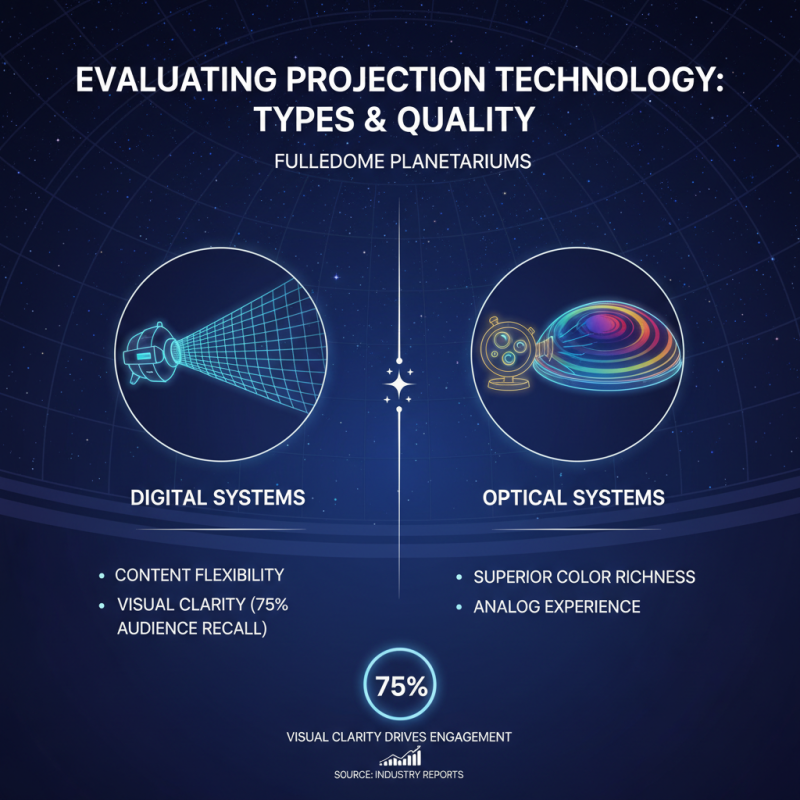
Choosing the right fulldome planetarium requires careful consideration of projection technology. The display type and quality significantly impact audience engagement. According to recent industry reports, 75% of visitors remember their experience based on visual clarity. Two main projection technologies dominate the market: digital and optical systems. Digital projectors offer flexibility in content but sometimes lack the color richness of optical projections.
When evaluating these systems, consider resolution and brightness. A projection with at least 4K resolution can enhance visual quality. Look for brightness levels above 20,000 lumens for vibrant displays. Some shows demand more dynamic color ranges than others, leading to a trade-off in choosing the right equipment.
Tip: Always request a demo. Testing the technology in real conditions can reveal potential flaws. Consider future content needs. A system that adapts easily to new formats ensures longevity. Upgrading from older systems is a common concern; therefore, choose a provider known for support and reliability. Focus on what's not perfect in your needs and align them with available options for informed choices.
Space and Installation Requirements for Fulldome Planetariums
When considering a fulldome planetarium, space and installation requirements are critical. Ensure the room is large enough to accommodate the dome structure. Measure the height, width, and length of the intended space carefully. A standard dome may require a minimum diameter of 25 feet. Think about accessibility for equipment and audiences.
Lighting and acoustics are also important factors. Choose a space that can be fully darkened. External noise should be minimal to enhance the viewer's experience. Soft walls can help improve sound quality, creating a more immersive environment. It's essential to plan for adequate ventilation, too.
Tips for selecting the right space include considering future expansions. If more projection technology is desired later, allow for extra room. Another point is to verify power supply capacity. Insufficient power can hinder functionality. Always assess the location’s safety and emergency access. Reflection on your space needs is key to a successful installation.
Budgeting for Your Fulldome Planetarium: Costs and Funding Sources
When budgeting for a fulldome planetarium, understanding costs is crucial. Research indicates that initial setup can range from $200,000 to over $1 million, depending on size and technology. Exploration of funding sources is essential. Grants, sponsorships, and community fundraising can offset expenses. Institutions often seek partnerships with local businesses or educational organizations to gather support.
Tips for budgeting effectively include breaking down expenses into categories: technology, installation, and ongoing maintenance. Each aspect requires careful financial planning. Consider bulk purchasing for technology to save costs. Collaborating with other institutions may lead to shared resources.
Be aware that costs may rise unexpectedly. Always incorporate a contingency fund to address these surprises. Continuous evaluation of your budget helps in adjusting to new challenges. According to a survey by the International Planetarium Society, 32% of institutions reported exceeding their initial budget, emphasizing the need for precise planning and adaptability in financial strategies.