10 Essential Tips for Building a Telescope Dome Structure
Building a Telescope Dome Structure is an exciting endeavor. It allows astronomers to observe the night sky with precision and comfort. However, this task requires careful planning and execution. Every detail can significantly impact the performance and longevity of the structure.
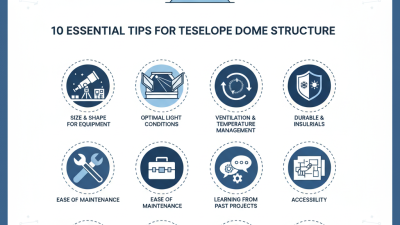
The design of your Telescope Dome Structure should accommodate both the equipment and the observer’s needs. Consider the size of your telescope and the accessibility of the dome. Weatherproofing is essential for protection against the elements. Evaluate local climate conditions. This can affect your materials and design choices.
Challenges will arise during construction. You may face issues with structure alignment or material strength. It's vital to seek advice from experienced builders to overcome these obstacles. Reflect on your design choices and adapt as necessary. Always remain open to learning from the process. Building a Telescope Dome Structure is more than just construction; it's a journey into the wonders of the universe.
Essential Considerations for Telescope Dome Design Planning
When planning a telescope dome, several crucial factors must be considered. Firstly, location is key. It should be away from light pollution. According to the International Dark-Sky Association, around 80% of North Americans live under light-polluted skies. This can obstruct clear views of celestial bodies. Choosing a dark site can enhance image quality significantly.
The dome's size is another consideration. A study by the Astronomical Society of the Pacific suggests a minimum diameter of 10 feet for effective usage. This size allows for more significant equipment and comfort during observation sessions.
Moreover, ventilation is often overlooked; it’s vital to maintain stable temperatures inside the dome. Without proper airflow, humidity and heat can distort images. A carefully placed fan can aid in achieving this balance.
Material selection also matters. Research indicates that materials like fiberglass or aluminum can withstand harsh weather. Durability is important for long-term investment. Regular maintenance is essential too, especially for seals and rotating mechanisms. Ignoring these details can lead to costly repairs or, worse, hindered observations.
Ultimately, reflect on these aspects to ensure your telescope dome serves its purpose effectively.
Materials and Tools Required for Building a Telescope Dome
Building a telescope dome requires careful selection of materials and tools. First, consider using plywood for the dome's skin. It’s lightweight and can be shaped easily. Insulation is critical too. Use foam boards to keep the interior temperature stable. Also, moisture-resistant materials can help prevent mold.
Next, you will need a few essential tools. A circular saw is useful for cutting wood precisely. Don't forget clamps to hold pieces together while you work. A level ensures everything is even, which is vital. You might face challenges while assembling the dome. For instance, aligning the dome properly can take time. It's easy to rush, but patience is necessary.
Always prepare for mistakes. You might find that your measurements are off. It happens to many builders. Reflecting on these errors can lead to better accuracy. Keeping a detailed checklist of materials and tools will help reduce confusion. Building a telescope dome is an exciting project, but it demands attention to detail and flexibility.
10 Essential Tips for Building a Telescope Dome Structure
| Tip |
Description |
Materials Required |
Tools Required |
| 1. Choose the Right Location |
Select a high and open area with minimal light pollution. |
N/A |
N/A |
| 2. Plan Your Design |
Draft a blueprint that includes dimensions and features. |
Paper, ruler |
Pencil, eraser |
| 3. Gather Materials |
Collect all necessary materials for the build. |
Wood, screws, nails, insulation |
N/A |
| 4. Build a Strong Foundation |
Create a stable base to support the dome structure. |
Concrete, gravel |
Shovel, level |
| 5. Construct the Dome |
Assemble the dome frame using selected materials. |
Plywood, metal brackets |
Hammer, saw |
| 6. Insulate the Dome |
Add insulation to regulate temperature inside. |
Insulation foam |
Utility knife |
| 7. Install the Roof |
Fit shingles or other roofing materials on the dome. |
Roofing shingles, felt |
Nail gun, hammer |
| 8. Create Access Door |
Ensure easy entry to the telescope area. |
Hinges, wood for door |
Screwdriver |
| 9. Final Touches |
Complete any additional work for aesthetics. |
Paint, sealant |
Brush, roller |
| 10. Install Telescope |
Set up and align the telescope in the dome. |
Telescope, mount |
Wrench, level |
Step-by-Step Construction Process for a Telescope Dome
Building a telescope dome is an exciting project. It involves careful planning and execution.
Start by selecting a suitable location. Choose a spot with minimal light pollution. This will enhance your stargazing experience.
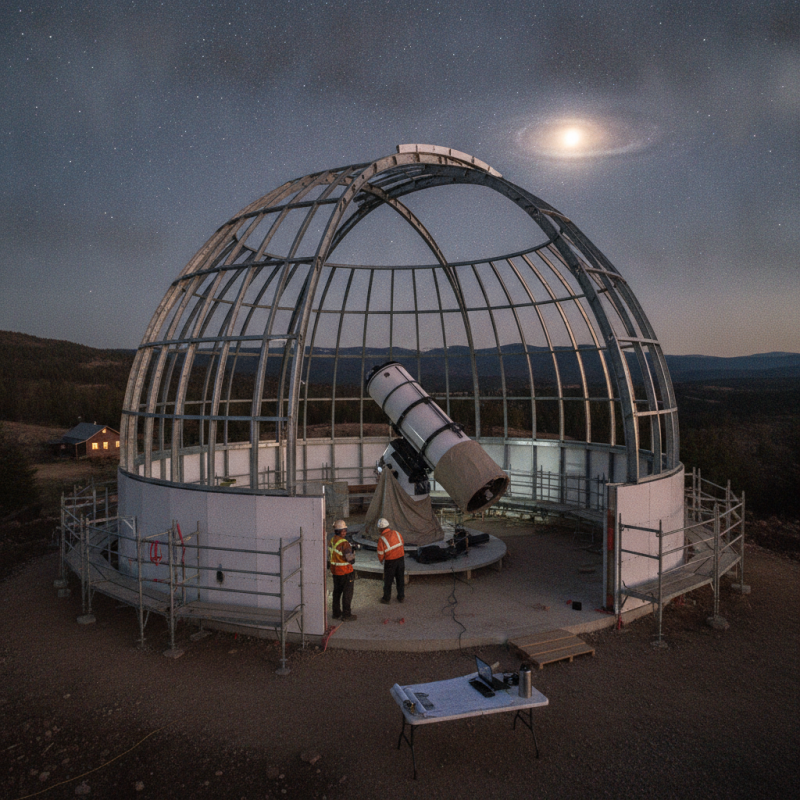
Next, gather your materials. You will need sturdy framing, weather-resistant materials, and a smooth rotational system for the dome.
Each piece should be durable. Imperfections in your design may need adjustments later.
Ensure the foundation is solid. Poor groundwork can lead to structural issues.
As you proceed, consider the dome’s rotation mechanism. This can be complex and may require trial and error.
Keep your tools handy and double-check measurements.
Reflect on your progress after each stage. This allows room for improvements.
Building a telescope dome is rewarding, but patience and careful thought are crucial throughout the process.
Maintaining Your Telescope Dome for Long-Term Use and Functionality
Maintaining your telescope dome is crucial for its longevity and performance. Regular inspections are essential. Check for leaks and damage after storms. Any small issues can become major problems if ignored. Sealant might need a touch-up every few years. Ensure that your dome’s motor functions smoothly. Lubrication is often overlooked but vital for seamless movement.
Cleaning the dome’s exterior is also necessary. Dust and debris can hinder your observations. Use a soft cloth to avoid scratches. Inside, keep the space organized. A cluttered environment can lead to accidents. Check the alignment of optics periodically. Even minor misalignments can affect your viewing experience.
Take time to assess the overall structure. Wood might warp; metal can rust. Be proactive in dealing with these issues. If problems arise, consult with professionals for repairs. Maintenance takes time and effort, but a well-cared dome provides rewarding experiences. It’s all about being attentive and responsive to the needs of your equipment.