What is a Star Observatory and Why Are They Important?
Star Observatories play a crucial role in our understanding of the universe. According to the National Science Foundation, observational astronomy contributes significantly to scientific knowledge. It allows us to explore cosmic phenomena, from distant galaxies to the birth of stars. These facilities often use advanced technology to capture data that is otherwise invisible to the naked eye.
Yet, many people overlook their importance. A survey by the American Astronomical Society found that only 30% of the public can name a star observatory. This lack of awareness can hinder funding and public interest. Despite their contributions, many observatories face financial struggles. They serve as educational resources and foster a sense of wonder about the cosmos.
Even so, the future of Star Observatories is uncertain. Budget cuts and competition for resources threaten their longevity. Reflection is needed on how we value these institutions. Preservation of these sites is essential for future generations. They are not just buildings; they are gateways to understanding our universe.
What is a Star Observatory?
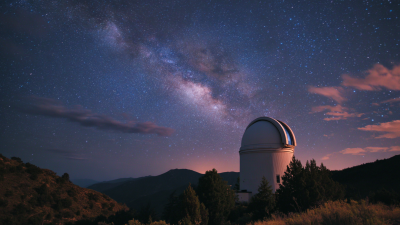
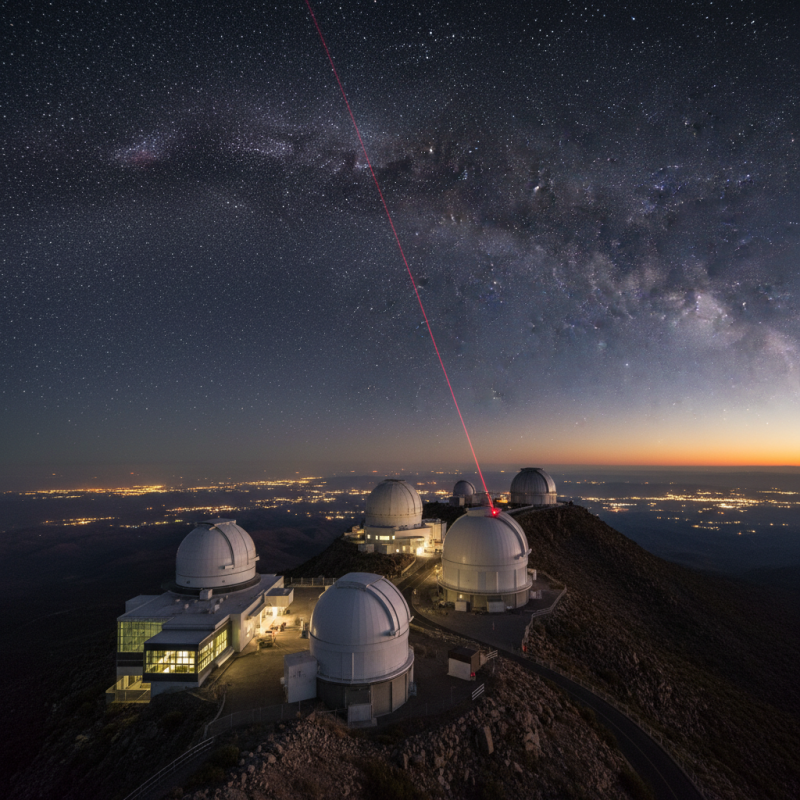
A star observatory is a facility dedicated to observing celestial bodies. These structures are equipped with powerful telescopes. They allow us to study stars, planets, and other astronomical phenomena. Observatories often sit on high mountains or remote locations. This helps reduce light pollution and atmospheric interference.
Astronomers and enthusiasts flock to observatories for research. They analyze data to understand the universe's mysteries. Each night offers a new chance to discover something extraordinary. However, not every observation yields results. Frustration can arise when conditions aren’t ideal. Clouds, equipment malfunctions, or even simple human error can hinder progress.
Despite these challenges, star observatories play a crucial role in science. They expand our knowledge about the cosmos. They also inspire people to look up and wonder. Each visit to an observatory can spark curiosity in hearts and minds. The beauty of the night sky invites reflection on our place in the universe. It reminds us that while we seek answers, many questions remain.
Star Observatories and Their Importance
The History of Star Observatories
Star observatories have a long and fascinating history. The earliest known observatories date back to ancient civilizations. For instance, the Babylonians created detailed star charts around 1,400 BC. Their observations paved the way for future astronomers. They laid the groundwork for celestial navigation and timekeeping. This foundational work continues to influence modern astronomy.
By the 17th century, advancements brought us instruments like the telescope. Galileo's improvements led to significant discoveries. His observations of Jupiter's moons changed our understanding of the solar system. Data from organizations, like the American Astronomical Society, shows how these early observatories laid the framework for scientific inquiry. They highlighted the relationship between observation and theory.
The growth of star observatories reflected humanity's quest for knowledge. Today, we see a mix of traditional telescopes and cutting-edge technology. Yet, despite advances, challenges remain. Some observatories face funding issues. Others struggle with light pollution. The importance of these institutions endures, but their survival often remains precarious. Balancing progress with preservation is critical for future generations of astronomers.
Key Instruments Used in Star Observatories
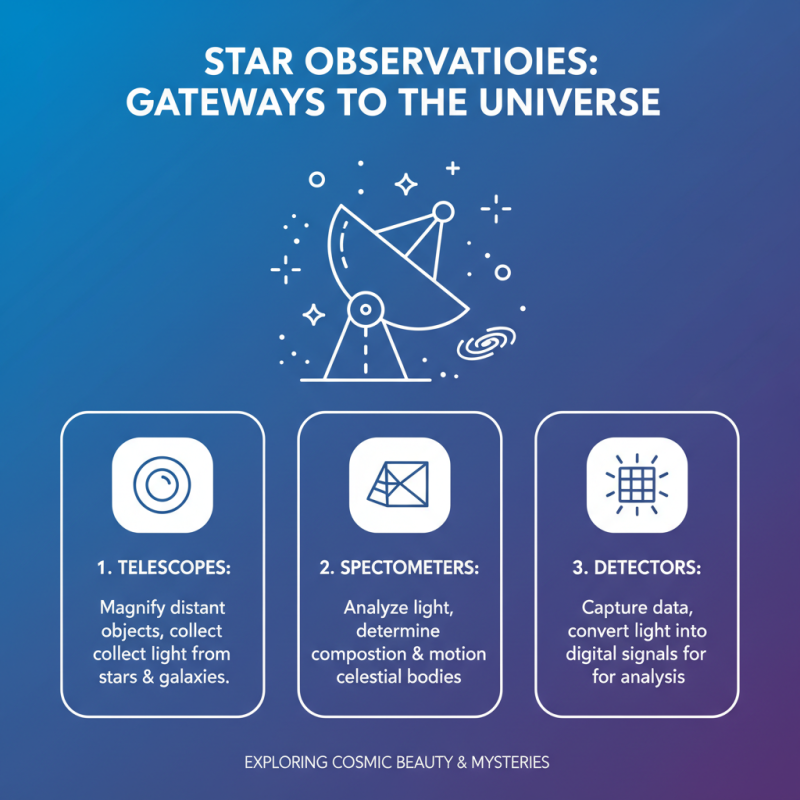
Star observatories serve as vital gateways to the universe. They explore celestial phenomena and advance our understanding of space. Key instruments in these observatories include telescopes, spectrometers, and detectors. Each tool helps scientists capture the beauty and mysteries of the cosmos.
Telescopes are the heart of any observatory. They collect light from distant stars and galaxies. Reflecting and refracting designs have different strengths. Reflectors tend to gather more light, while refractors offer clearer images. Spectrometers analyze light, revealing the chemical makeup of celestial bodies. Both tools enhance our grasp of the universe's elements.
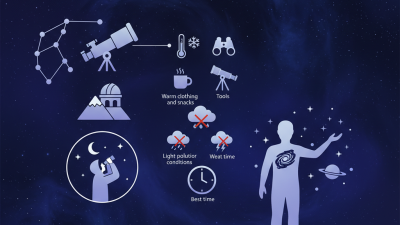
Tips: When visiting an observatory, try to attend guided tours. They often provide deeper insights. Keep a journal of your observations. Documenting your thoughts can enrich your understanding. Appreciating the night sky requires patience; results may not always meet expectations. Yet, the journey of discovery is invaluable.
The Role of Star Observatories in Astronomy Research
Star observatories play a critical role in the field of astronomy. They provide researchers with the tools necessary to study celestial phenomena. Telescopes capture light from distant stars and galaxies, allowing scientists to explore the universe. Observatories are usually located in remote areas, away from city lights, to improve visibility. Their strategic placement is crucial for gathering accurate data.
In astronomy research, star observatories facilitate groundbreaking discoveries. Scientists can monitor changes in star behavior and patterns over time. This can lead to new insights about the lifecycle of stars. Researchers often collaborate globally, sharing data and findings for a broader understanding. However, accessibility remains a challenge. Not all researchers can access advanced facilities or funding. This inequality can hinder progress.
In addition to their research contributions, observatories spark public interest in science. Many host events to educate people about the universe. Stargazing events are popular, drawing crowds eager to learn. However, not every visitor leaves with a clearer understanding. Curiosity often leads to more questions than answers.
Ultimately, star observatories serve as both research hubs and public gateways to the cosmos. They ignite passion but also raise barriers that need addressing.
Impact of Star Observatories on Public Education and Outreach
Star observatories play a crucial role in public education and outreach. They provide unique access to the universe. Many people, especially students, have limited exposure to astronomy. Visiting a star observatory can ignite interest and curiosity. Observatories often hold public events and stargazing nights. These activities foster a love for science and exploration.
Engagement with the cosmos has tangible benefits. Public talks and workshops help demystify complex concepts. When people look through a telescope, they see distant galaxies. This firsthand experience can be inspiring. However, not all programs reach their full potential. Some observatories struggle with outreach efforts. They may fail to connect with diverse communities. More collaboration with schools can enhance visibility.
Moreover, it is vital to reflect on inclusivity. Star observations should welcome everyone. Yet, barriers like location or access to transportation remain. Addressing these issues can broaden participation. The simple act of looking up at the stars should be available to all. By improving outreach, star observatories can create impactful educational experiences.
What is a Star Observatory and Why Are They Important? - Impact of Star Observatories on Public Education and Outreach
| Aspect |
Description |
| Public Engagement |
Star observatories host public events, such as star-gazing nights and educational workshops to promote astronomy. |
| Educational Programs |
Many observatories offer programs for schools, including guided tours and science curricula related to astronomy. |
| Research Contributions |
Observatories contribute to scientific research in astrophysics and cosmology, aiding in public understanding of universe phenomena. |
| Community Collaboration |
They often collaborate with local schools and institutions to enhance community interest in the sciences. |
| Technology and Innovation |
Observatories provide insights into the latest technologies in telescopes and astronomical instruments, fostering innovation. |
| Astronomy Festivals |
Events like astronomy festivals promote long-term interest in the field by engaging families and enthusiasts. |