Top Tips for Visiting Star Observatories and Enjoying the Night Sky
Exploring the wonders of the night sky is an experience like no other. Star observatories play a vital role in this journey. They offer a unique opportunity to connect with the universe beyond our planet. These venues provide stunning views of stars, planets, and galaxies. Many visitors find themselves awestruck by the sheer beauty of the cosmos.
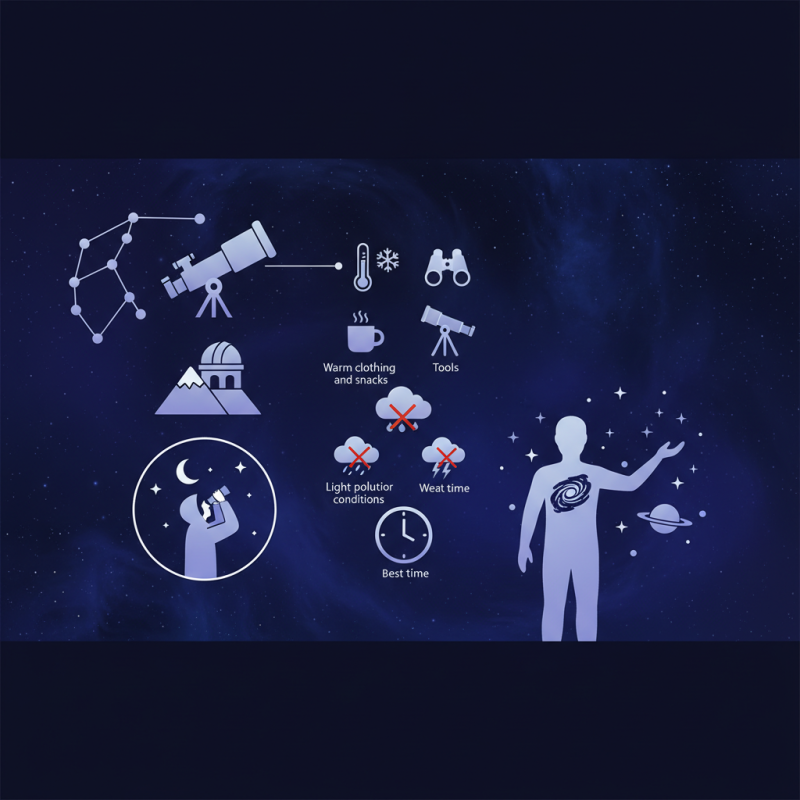
When planning a visit to star observatories, preparation is key. Research your destination to find the best time to visit. Clear skies are essential for stargazing. Bring warm clothing and snacks to enhance your experience. The right tools, like binoculars or a telescope, can also elevate your evening. While many people enjoy stargazing, it is not just about looking; it's about experiencing.
Visiting a star observatory can be a challenge at times. Light pollution and weather conditions can obstruct your view. It’s essential to remain patient and adaptable. Sometimes, the best views come unexpectedly. Remember to embrace the imperfections during your visit. The night sky, with all its mysteries, invites us to reflect on our place in the universe.
Essential Equipment for Stargazing at Observatories
Stargazing is an enchanting experience. Observatories enhance this with specialized equipment. To fully enjoy the night sky, having the right tools is crucial. A recent report highlights that nearly 75% of novice stargazers lack essential gear. Binoculars serve as an excellent starting point. They are portable and user-friendly, ideal for beginners. A good pair can reveal details of the moon's surface, or even some distant stars.
For those willing to invest more, a telescope becomes indispensable. A good entry-level telescope allows viewing planets in detail. Jupiter's stripes and Saturn's rings come alive in crisp resolution. According to the International Astronomical Union, the ideal range for an amateur telescope is between 70mm to 130mm aperture. This size balances portability and powerful clarity for celestial observations. It’s surprisingly grounding when using technical equipment, yet some may find complex settings overwhelming.
Don’t overlook accessories. Star charts and apps can greatly enhance your experience. Learning the constellations adds depth to viewing sessions. However, remember that too much tech can lead to distraction. Sometimes, just lying on a blanket and gazing at the sky is the best way to connect with the universe. Embrace the imperfections of the night; each viewing experience should be a reflection of your journey into the cosmos.
Top Tips for Visiting Star Observatories and Enjoying the Night Sky - Essential Equipment for Stargazing at Observatories
| Equipment |
Description |
Importance |
Tips |
| Binoculars |
Portable, easy to use for quick observing |
Good for broad views of the night sky |
Choose at least 10x50 magnification |
| Telescope |
Allows for detailed views of celestial objects |
Essential for planetary and deep-sky observations |
Learn the setup and focusing before your visit |
| Star Chart or App |
Helps identify constellations and planets |
Useful for both beginners and experienced stargazers |
Familiarize yourself with the layout of the sky beforehand |
| Red LED Flashlight |
Prevents your night vision from being disrupted |
Critical for maintaining dark adaptation |
Use when moving around or reading charts |
| Warm Clothing |
Essential for comfort during cold nights |
Helps you stay out longer and enjoy the experience |
Layer up for variable temperatures |
| Notebook and Pencil |
For jotting down observations |
Enhances learning and personal stargazing experience |
Make sketches or notes about your sightings |
Best Practices for Planning Your Observatory Visit
When planning your visit to a star observatory, timing is crucial. Choose a dark night to enhance visibility. Consider the moon's phase; a full moon can wash out fainter stars. Arriving early is helpful; it gives you time to explore, learn, and prepare for the main event. Look for informative displays or easy talks. Engaging with staff or other visitors can deepen your experience.
Dress appropriately for the conditions. Nights can get chilly, even in warmer months. Bring blankets or a chair for comfort. Don't forget snacks and water. Eating under the stars can be delightful. Also, check if telescopes are available. Uneven lines can lead to missed opportunities. Sometimes, waiting feels frustrating, as group dynamics can change the experience.
Be patient with your expectations. Not every night will reveal a dazzling sky. Clouds can roll in unexpectedly. Try to enjoy the moment, even if your view is obstructed. Emphasize the beauty of being outside, breathing the cool night air. It’s about connection—not just with the cosmos, but with fellow stargazers. Each visit can be its own adventure.
Understanding the Night Sky: Key Celestial Events to Watch
The night sky is a treasure trove of wonders. Every season brings unique celestial events that captivate stargazers. For instance, meteor showers often dazzle with streaks of brilliant light. The Perseids in August and the Geminids in December are particularly famous. These events can inspire awe, but they can also be challenging to view. A clear sky, away from city lights, is essential for the best experience.
Lunar phases offer another chance for observation. A full moon provides bright illumination, but it can wash out fainter stars. The new moon is ideal for deep-sky viewing. With dark skies overhead, distant galaxies become visible. Plan a visit during this phase. However, anticipation can sometimes lead to disappointment if clouds roll in unexpectedly.
Eclipses present a fantastic opportunity to witness the dynamic nature of our solar system. Solar and lunar eclipses are awe-inspiring events. They teach us about the alignment of celestial bodies. Don’t forget to check your local schedule for dates and times. However, remember that large crowds often gather for these occasions, turning serenity into chaos. Balancing timing and location is crucial to enjoying the night sky's beauty.
Top Tips for Visiting Star Observatories and Enjoying the Night Sky
This chart depicts the best times to observe key celestial events throughout the year. The months are displayed on the x-axis, while the number of significant events per month is shown on the y-axis.
Photography Tips for Capturing the Night Sky
Capturing the night sky is a thrilling experience. It requires not only skill but also the right conditions. According to a study by the International Dark-Sky Association, light pollution affects over 80% of the world's population. This makes finding a dark location essential. Star observatories often serve as ideal spots, as they are situated away from artificial lights.
When photographing the stars, consider the camera settings. Use a wide aperture to let in more light. A good rule is to set your aperture to f/2.8 or wider. Set a high ISO, around 1600 to 3200, to capture more detail. Remember, long exposure times are key. Try exposures of 15 to 30 seconds for best results. However, longer exposures may lead to star trails. Some may find this imperfect look charming, while others may strive for pinpoint stars.
Stability is crucial. A sturdy tripod can make a difference. Even light wind can cause motion blur. If you don't have a remote shutter release, use the camera's timer. It reduces shake during the shot. Be mindful of your composition too. Including elements like tree silhouettes or mountains can add depth to your photos. Remember, every shot may not come out perfect. Each one offers a chance to learn and improve.
Safety Guidelines for a Comfortable and Enjoyable Experience
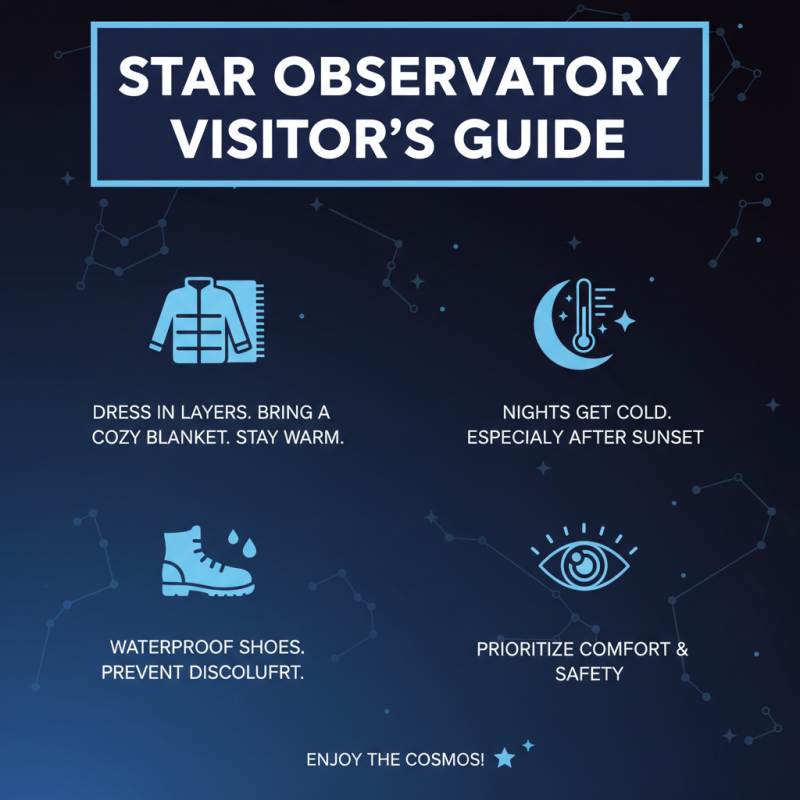
When visiting star observatories, comfort and safety should be your priorities. The night sky can be mesmerizing, but conditions can change rapidly. Dress in layers to stay warm. A cozy blanket might be a good addition. It’s easy to underestimate the cold, especially after sunset. Footwear matters too. Waterproof shoes can prevent discomfort due to dew or uneven terrain.
Stay aware of your surroundings. In dim light, it’s easy to trip or bump into something. Use a red flashlight to preserve your night vision. Encourage friends to do the same. A simple tool can make all the difference. Bring a buddy; exploring with someone enhances the experience. Plus, it ensures someone's watching out for hazards.
Consider the impact of noise. While chatting is enjoyable, loud conversations can disturb others. Be mindful of the atmosphere. Finally, bring snacks to keep energy levels up. However, clean up after yourself. Leaving no trace shows respect for nature and other visitors. Enjoy the stars, but remember to be considerate.