Top 10 Best Wide Angle Lenses to Buy in 2026
Choosing a Wide Angle Lens in 2026 means balancing more than field of view. Distortion, autofocus, edge sharpness, weight, and price all matter. A 14mm lens can capture a tight city street, yet bend doorframes near the edges. A 24mm lens may feel more natural, but leave a small room looking cramped.
Industry data helps set the scene, though it has limits. CIPA’s 2024 camera-shipment statistics track camera shipments by type and market; they do not report wide-angle lens sales separately. That distinction matters. Camera demand can indicate a changing photography market, but it cannot tell buyers which lens performs best. For that, specifications must be checked against real-world handling, compatible camera systems, and independent tests.
Photography educator and author David duChemin offers a useful reminder: “The gear is good. Vision is better.” His point is relevant here: a wider view cannot fix weak composition. Still, the right lens can make a practical difference when photographing interiors, landscapes, architecture, or travel scenes. This guide compares ten options by focal range, aperture, image quality, stabilization, and value. Where performance depends on the camera body or shooting conditions, we say so. Some trade-offs are awkward; no single lens suits every photographer. These picks are informed recommendations, not a promise that every model will fit every kit.
Wide-Angle Lens Basics and Key Specifications
Wide-angle lenses are often described by focal length, but angle of view also depends on sensor size. On a full-frame camera, 24mm captures roughly 84 degrees diagonally; 16mm reaches about 108 degrees. These figures are approximate and vary by lens design. Shorter focal lengths fit more of a room or landscape into the frame, but can stretch nearby faces and furniture near the edges. That matters.
Check maximum aperture, measured in f-stops, alongside focal length. A lower f-number admits more light and can help indoors, though wide-angle lenses often keep much of a scene in focus. Stabilization can steady a still subject, but it cannot freeze a moving child or cyclist. Distortion correction, weather sealing, minimum focus distance, and filter compatibility also affect daily use. CIPA’s 2024 report recorded 6.33 million interchangeable-lens camera shipments worldwide. That signals an active camera market, not superior lens quality.
Tips: Compare lenses on the same sensor format, and inspect sample images at the edges. For architecture, check whether straight lines bow; for travel, see how nearby objects look near the corners. Don’t choose by the widest number alone. I sometimes favor a 24mm view because people look less stretched, although a tight interior can change that choice. A specification sheet cannot show every trade-off. Test the lens in the room you actually photograph.
Camera Formats, Lens Mounts, and Compatibility
A wide-angle lens must match both your camera’s sensor format and its mount. These are separate checks. A lens may attach physically yet fail to cover the sensor properly. On a full-frame camera, a lens designed for a smaller sensor can produce dark corners or a cropped image. On an APS-C or Micro Four Thirds camera, the same focal length frames more tightly than it does on full frame. Check the manufacturer’s stated coverage, then compare equivalent fields of view. The crop factor is easy to overlook.
Mount compatibility involves more than the shape of the fitting. Confirm electronic communication, autofocus support, and aperture control for your camera and lens combination. An adapter may bridge different mounts, but it can affect autofocus speed or remove electronic functions. Some combinations work well for still subjects and feel frustrating for moving ones. Check the exact camera model and adapter specifications before buying.
Think about how you shoot, too. A 14 mm lens can capture a cramped room, but straight walls may bow near the edges. On a crop-sensor body, a moderately wide lens may be more useful for street scenes or travel. Filter size and hood clearance matter when packing. Small details, but real ones. Compatibility charts help, though they cannot show how a lens handles in your hands. If possible, test the framing indoors and outdoors before committing.
The 10 Best Wide-Angle Lenses to Buy in 2026
Choosing a wide-angle lens in 2026 means balancing field of view, weight, and corner sharpness. Check compatibility with your camera before comparing prices. A 14mm lens can make a small room feel expansive, but it may stretch faces near the frame’s edge. For architecture, straight lines and reliable distortion correction matter more than dramatic width.
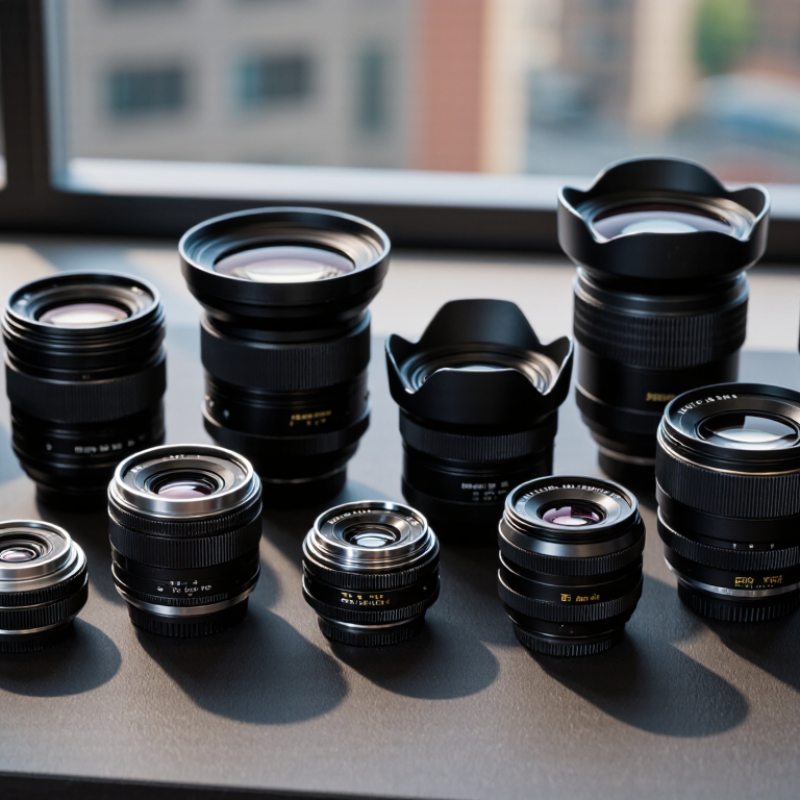
Ten useful options cover different needs:
a 14mm f/1.8 prime for night skies;
a 14–24mm f/2.8 zoom for demanding interiors;
a 16–35mm f/2.8 for events;
and a lighter 16–35mm f/4 for travel.
Consider a 17–28mm f/2.8 when pack size matters,
or a 20mm f/1.8 prime for dim streets.
APS-C users can compare a 10–20mm zoom,
an 11–20mm f/2.8,
and a compact 12mm prime.
A 24mm tilt-shift lens offers precise architectural control.
No single pick suits every camera or subject. Review full-resolution samples, especially corners at the widest setting, and check whether filters fit the front element. That detail is easy to overlook. I would not treat a sharp center as proof of a great lens; edges can soften, and strong correction may crop the image. Try the lens at the distance you actually shoot.
Comparing Image Quality, Design, and Price
Top 10 Best Wide Angle Lenses to Buy in 2026
Comparing Image Quality, Design, and Price
Compare corner sharpness, distortion, flare control, and autofocus consistency—not just center detail. A lens can look crisp on a shop display yet soften buildings near the frame edges. Check independent test charts at several apertures, then inspect real-world photos with straight lines and bright windows. Imatest’s technical guidance explains why MTF measurements help assess sharpness, but one score cannot describe every scene. Small details matter.
Design affects daily use. A lighter barrel is easier to carry on long city walks, while weather sealing and a firm focus ring can help outdoors. CIPA’s 2024 shipment statistics report about 8.49 million digital cameras shipped worldwide. That figure gives market context, not proof that a costly lens delivers better images. Compare prices alongside filter size, included accessories, and repair support; these details can change the true cost. I would still leave room for personal preference—wide-angle distortion can feel dramatic, or simply distracting.
Tips: Photograph a brick wall and a backlit window. Check the corners, then compare files at the same aperture. For tight budgets, a modest maximum aperture may be a fair trade for lower weight and price.
Common Photography Uses for Wide-Angle Lenses
Wide-angle lenses are useful when the scene feels larger than the frame. Landscape photographers use them to include close foreground details, such as wet stones, and distant ridgelines in one composition. At dawn, a broad view can hold both a shadowed trail and pale light gathering above the mountains. But getting close changes perspective: nearby objects look larger, while distant features seem smaller. Not every scene needs that much sky.
In small rooms, a wide lens can show the layout, windows, and furniture without forcing the photographer against a wall. For architecture, it can capture a building’s full height from a nearby street, though tilted camera angles may make walls lean. Keep the camera level when straight lines matter. Environmental portraits also benefit when the setting tells part of the subject’s story: a baker beside a flour-dusted counter, for example. On trips, wide views help record busy markets and narrow lanes, but crowded edges can introduce distracting details. Check the corners before taking the shot; a stray bag or bright sign is easy to miss.
Top 10 Best Wide-Angle Lenses to Buy in 2026
Common Photography Uses for Wide-Angle Lenses
Wider views are useful for fitting more of a scene into the frame. The focal lengths shown are representative examples, not fixed rules. Horizontal field of view is calculated for a rectilinear lens on a 36 mm-wide full-frame sensor.