China has become a significant manufacturing base for precision observatory equipment. According to the OECD Main Science and Technology Indicators, China’s research and development intensity reached about 2.4% of GDP in 2021. This expanding technical ecosystem supports stronger capabilities in steel forming, CNC machining, automation, and environmental control. These skills matter when selecting an Astronomy Dome supplier.
A reliable dome is more than a rotating roof. It must open smoothly, resist wind, manage rainwater, and protect sensitive optical instruments. SPIE technical publications frequently highlight vibration control, thermal stability, and accurate tracking as essential observatory requirements. Our manufacturing approach reflects these principles through load calculations, motor testing, sealing inspections, and repeated rotation trials. Project experience also reveals practical details. A 6-meter dome may require reinforced ribs, quiet drive systems, and careful alignment during installation. Small gaps can allow dust inside. Poor drainage can damage equipment.
China’s supply chain can shorten production cycles and support customized designs for schools, research centers, hotels, and private observatories. Still, no manufacturer should rely on factory claims alone. Buyers should review material certificates, quality records, wind-load data, and after-sales procedures. The International Dark-Sky Association also emphasizes responsible lighting, which should influence the surrounding observatory design.
There is room for improvement. Some suppliers present impressive images but provide limited engineering evidence. A truly professional China Astronomy Dome manufacturer must communicate clearly, test honestly, and adapt designs to real observing conditions. That standard creates safer installations and more dependable long-term performance.
China’s astronomy dome manufacturing landscape serves varied needs, from school planetariums to research observatories. Manufacturers combine frames, curved panels, drive systems, and weather seals. Each part affects rotation, noise, and alignment over time. A dome may look simple from outside. Inside, tolerances matter.
Production often involves metal fabrication, precision cutting, assembly, and project-specific engineering. Suppliers need to account for diameter, wind exposure, humidity, maintenance access, and telescope clearance. A slit that moves smoothly in the workshop can bind after installation if the base is uneven. This happens. Careful commissioning helps, but transport and local conditions can still create surprises.
China’s broad industrial supply chain supports custom dimensions and coordinated components, though capabilities vary between manufacturers. Buyers can review material specifications, rotation tests, sealing details, control systems, and service documents instead of relying on renderings alone. Ask how components can be replaced years later. Details matter. A lower quotation may omit foundations, installation, or weather testing, so assumptions deserve scrutiny before fabrication begins.
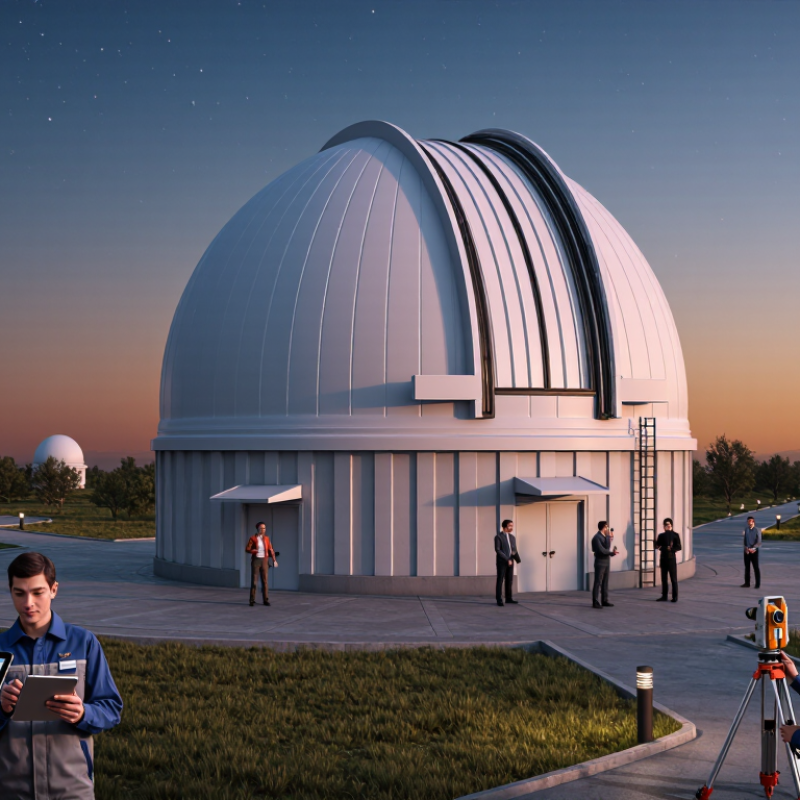
An astronomy dome is more than a weather cover. Its shape affects telescope clearance, airflow, and how easily observers can reach the sky. A slit dome uses a curved shell with a narrow opening that turns toward the target. The slit edges need careful alignment; even a small gap can admit wind-driven rain. Rotating on a circular track, the dome also needs balanced support and reliable drive components.
A roll-off roof uses straight rails and moves aside to expose most of the observing area. It can suit a compact, fixed telescope, but the roof needs clear travel space and secure stops. Geodesic structures use triangular frames to spread loads across many members. Their geometry can offer good stiffness, though joints and panel seals deserve close inspection. Practical details matter. A sticking wheel is no small nuisance.
Frame materials, cladding, and foundations should match local wind, snow, and temperature conditions. Aluminum resists corrosion and keeps weight down; steel can provide rigidity but needs suitable protection. Insulated panels may reduce condensation, yet they cannot replace ventilation. There is no perfect layout. A narrow slit can limit useful viewing angles, while a fully opening roof may expose equipment to sudden weather. Check telescope movement, service access, and drainage before settling on a structure.
Design starts with the telescope, not the outer shell. Engineers confirm the instrument’s height, movement range, viewing direction, and required opening size. They then shape the dome around those needs, allowing clearance for rotation and maintenance. A narrow slit may restrict observations; an oversized one can admit wind and rain. These details matter.
The structure is typically divided into curved panels, ribs, a rotating base, and a shutter system. Material choice depends on span, local weather, transport, and corrosion exposure. During manufacturing, panels are cut and formed to controlled dimensions, then assembled to check alignment. Seals, drainage paths, and drive components are tested before installation. A drawing can look perfect, yet a small mismatch at the base may cause uneven rotation. Factory checks reduce that risk, but site conditions still deserve careful review.
Tips: Confirm the telescope envelope and site wind conditions before approving drawings. Ask how panel joints, shutter seals, and rotation are inspected. Keep access space for routine maintenance. Small omissions can become costly later.
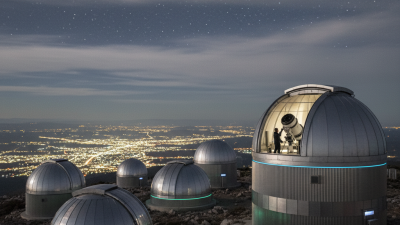
Astronomy domes built in China serve research observatories, university teaching facilities, and public science centers. At a research site, a rotating enclosure helps telescopes follow objects across the night sky. A narrow opening exposes the instrument while the rest of the equipment remains sheltered. This matters when wind, rain, or dust can interrupt observations. The dome is not just a roof.
Universities use smaller domes for practical lessons. Students can watch the slit align with a telescope, then compare live observations with star charts. Science centers may add guided viewing sessions, where clear access and safe visitor movement matter as much as the optics. Some installations also support remote operation, reducing the need for staff at isolated sites. Not every location needs the same design. Humid coastal air, cold highland nights, and city light pollution create different demands. These details are easy to underestimate. A dome may rotate smoothly during testing, yet need careful maintenance after seasons of moisture and temperature changes. Site surveys, ventilation planning, and realistic operating routines help make the facility useful beyond its opening day.
China Top Astronomy Dome Manufacturer and Supplier
How to Choose a Reliable Dome Supplier in China
Choosing a reliable dome supplier in China requires more than comparing prices. A professional supplier should explain structural design, material selection, production steps, and installation requirements clearly. Ask for technical drawings, load calculations, and sample sections before placing an order. A dependable team will discuss wind pressure, snow loads, humidity, and telescope clearance for your location.
Look for proven quality controls. The factory should identify aluminum grades, coating methods, panel thickness, and sealing materials. Do not accept vague promises. Material traceability matters. Request inspection records, product photographs, and test reports from recent projects. Certifications can support credibility, but they should match the actual product and destination market. Site audits or live video inspections can reveal workshop conditions, equipment, and worker attention.
Communication is equally important. During discussions, notice how quickly the supplier answers difficult questions. Reliable teams explain risks instead of hiding them. Confirm production time, packaging details, spare parts, warranty terms, and after-sales support in writing. A polished catalog can still hide weak engineering or delayed responses. No supplier is flawless. Still, transparent suppliers admit limitations and suggest practical corrections. Buyers should also review their own specifications carefully, because unclear requirements often create avoidable changes later.
| Evaluation Dimension | Recommended Benchmark | How to Verify a Reliable Supplier | Why It Matters |
|---|---|---|---|
| Dome Diameter and Usable Space | Confirm the clear internal diameter, equipment clearance, telescope footprint, and maintenance access before ordering. | Request dimensioned drawings showing the internal diameter, external diameter, wall height, zenith clearance, door opening, and equipment layout. | The advertised diameter may not equal the actual usable observing space. Accurate dimensions help prevent interference between the dome, telescope, and accessories. |
| Dome Construction Material | Common materials include fiberglass-reinforced plastic, aluminum, steel, and insulated composite panels. The selected material should suit the local climate and load requirements. | Ask for material specifications, panel thickness, structural drawings, corrosion-resistance information, and sample photos of internal and external surfaces. | Material selection affects weight, durability, thermal behavior, corrosion resistance, transportation, and long-term maintenance. |
| Structural Wind Resistance | The structure should be engineered for the project location’s design wind speed and exposure category in accordance with applicable local building requirements. | Request structural calculations, anchoring details, load assumptions, and confirmation that the design has been reviewed for the installation site. | Astronomy domes are exposed to wind loads, and insufficient anchoring or structural design can affect safety and pointing stability. |
| Snow and Rain Load Capacity | For snowy or high-rainfall regions, verify roof drainage, snow-load assumptions, waterproof joints, and the required drainage slope. | Obtain the specified snow load, drainage plan, sealing details, waterproofing method, and installation instructions for flashing and joints. | Water leakage and accumulated snow can increase structural loads, damage instruments, and shorten the service life of the enclosure. |
| Rotation Accuracy and Smoothness | The dome should provide stable, low-vibration rotation with controllable speed and repeatable positioning suitable for the telescope system. | Ask for drive-system specifications, rotation speed, control resolution, limit-switch details, emergency-stop functions, and factory test records. | Smooth rotation reduces vibration and helps the slit remain aligned with the telescope during tracking and imaging. |
| Shutter Opening and Closing | The shutter should open fully, close securely, include position feedback, and provide protection against accidental operation. | Request shutter travel drawings, motor and gearbox details, open/closed limit protection, manual override procedures, and a documented cycle test. | Reliable shutter operation protects optical equipment from weather and reduces the risk of mechanical damage during use. |
| Weather Sealing and Drainage | The enclosure should use continuous seals, properly designed overlaps, protected cable entries, and a clear drainage path. | Review cross-section drawings of joints, door seals, shutter seals, drainage outlets, and cable penetrations. Request water-resistance test information where available. | Weather sealing is essential for protecting telescopes, cameras, mounts, electronics, and interior finishes from rain and condensation. |
| Ventilation and Thermal Control | The design should support heat removal, airflow management, and reduced internal temperature gradients during daytime and nighttime operation. | Check ventilation openings, fan capacity, thermostat or sensor options, insulation details, and the recommended operating procedure for daytime cooling. | Reducing heat buildup and turbulence can improve image quality and help prevent condensation on optical surfaces. |
| Telescope and Dome Control Compatibility | The dome control system should support position feedback and provide a practical interface for synchronization with the telescope mount. | Request communication-interface details, supported protocols, wiring diagrams, software documentation, and evidence of compatibility with the selected telescope control system. | Synchronization helps maintain slit alignment while the telescope tracks objects across the sky. |
| Electrical Safety and Protection | The system should include suitable grounding, circuit protection, emergency stops, weather-resistant electrical enclosures, and clearly labeled wiring. | Review electrical schematics, component ratings, grounding instructions, control-panel protection level, emergency-stop layout, and applicable conformity documents. | Proper electrical design reduces risks from short circuits, lightning, moisture, overloads, and unexpected mechanical movement. |
| Installation Requirements | The supplier should define foundation dimensions, anchor locations, lifting points, assembly sequence, required tools, and site-service conditions. | Request a foundation plan, installation manual, packing list, lifting instructions, commissioning checklist, and a clear division of responsibilities. | Incomplete site information can cause installation delays, additional construction costs, and alignment problems. |
| Quality Control and Factory Testing | Key systems should be inspected before shipment, including rotation, shutter movement, sealing interfaces, electrical controls, and safety functions. | Ask for inspection checklists, factory acceptance test procedures, dimensional inspection records, photographs, and corrective-action records when applicable. | Documented testing provides evidence that the supplied system matches the approved design and reduces commissioning risks. |
| Customization Capability | The supplier should be able to adapt the design to telescope size, observatory location, foundation conditions, control requirements, and local weather. | Evaluate the supplier’s engineering workflow, drawing-revision process, technical questionnaire, prototype or mock-up capability, and change-control procedure. | Astronomy domes are project-specific systems, and unsuitable standard dimensions may compromise operation or maintenance access. |
| Packaging and Transportation | Components should be protected against impact, moisture, corrosion, and deformation during inland and international transportation. | Review the packing method, lifting marks, moisture protection, spare-parts packaging, container-loading plan, and shipping-document requirements. | Large curved panels, motors, controllers, and seals can be damaged if packaging and handling procedures are inadequate. |
| Warranty and Spare Parts | A written warranty should specify coverage, duration, exclusions, response procedures, and the availability of critical replacement parts. | Request the warranty document, recommended spare-parts list, replacement lead times, troubleshooting procedure, and remote-support channels. | Access to technical support and replacement parts helps minimize downtime after installation and during long-term operation. |
| Supplier Documentation | A complete technical package should include drawings, manuals, wiring diagrams, maintenance schedules, spare-parts lists, and commissioning records. | Confirm the document list before contract signing and require approval of critical drawings before production begins. | Accurate documentation supports installation, operation, maintenance, future upgrades, and safe troubleshooting. |
| Total Project Cost | Compare the complete delivered cost, including engineering, packaging, shipping, installation, commissioning, controls, taxes, and optional accessories. | Request an itemized quotation with defined Incoterms, payment milestones, delivery schedule, included services, exclusions, and change-order rates. | A low equipment price may not represent the lowest total cost if installation, controls, foundations, or after-sales services are excluded. |