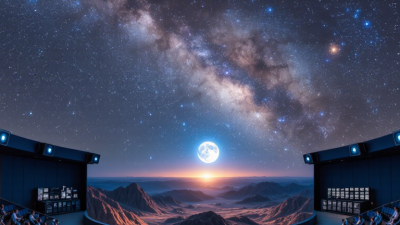
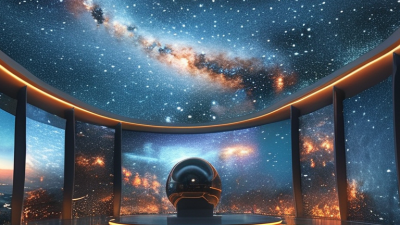
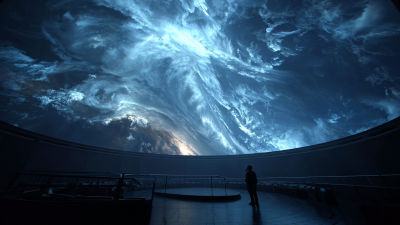
Choosing a Top China Fulldome Projection Manufacturer Supplier requires more than comparing prices or brightness ratings. A reliable partner should demonstrate practical experience in planetariums, museums, science centers, immersive theaters, and educational venues. Their team should understand projection geometry, dome curvature, image blending, color calibration, server integration, and long-term system maintenance. These details affect whether a visitor sees a smooth night sky or distracting seams across the dome.
A qualified supplier should provide clear technical documentation, production evidence, installation references, and responsive after-sales support. Inspect the projector specifications carefully. Native resolution, lens selection, contrast, brightness stability, cooling design, and operating noise all influence the final experience. Ask how engineers manage edge blending and recalibrate the system after transportation. Small alignment errors can become obvious on a six-meter dome.
Fulldome Projection is not only a hardware purchase. It is a coordinated visual system that connects equipment, software, content, space, and audience expectations. Experienced manufacturers can recommend suitable configurations instead of forcing one standard package. Still, no supplier is perfect. Project schedules may change, and performance depends on installation conditions. This point deserves honest discussion. Buyers should request testing, warranty terms, spare-parts availability, training plans, and compliance documents before signing an agreement. A dependable China-based supplier earns trust through measurable performance, transparent communication, and support that continues after the screen goes dark.
Top China Fulldome Projection Manufacturer Supplier
Fulldome Projection Systems: Definition and Main Components
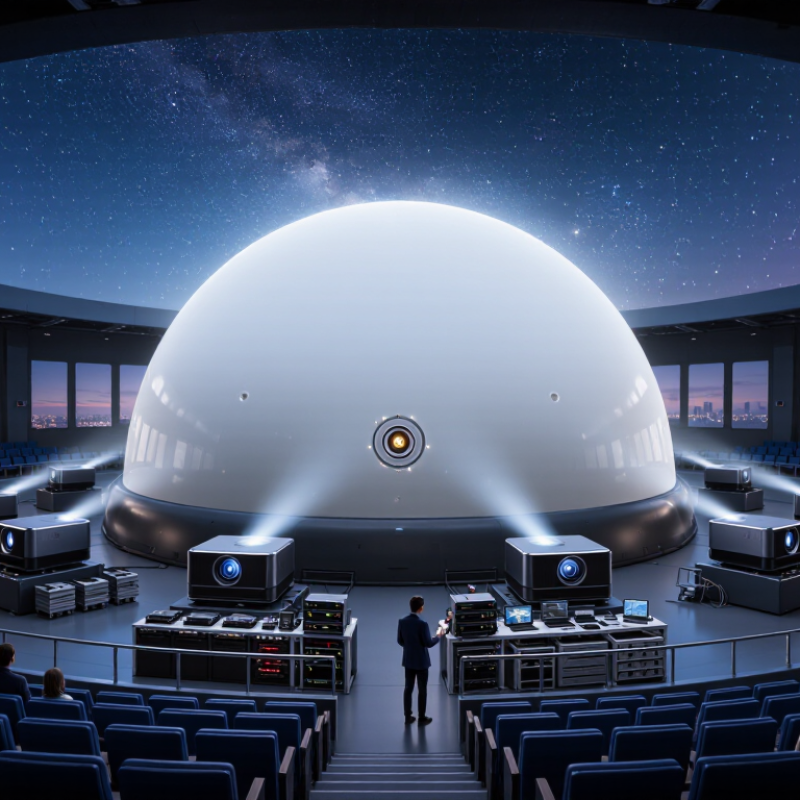
A fulldome projection system displays moving images across a curved, hemispherical screen. Unlike a flat display, it surrounds the audience with visual content. This design supports planetarium shows, immersive education, simulation, and artistic experiences. The dome may use a fixed structure or a portable inflatable shell.
The projection system usually includes multiple high-resolution projectors, wide-angle lenses, a media server, and synchronization software. Each projector covers one section of the dome. Edge blending removes visible lines between images. Geometric calibration corrects distortion caused by the curved surface. Audio equipment, control panels, ventilation, and safety structures also affect performance. Small details matter.
From practical installation experience, brightness is not the only measure of quality. Uniform color, stable playback, low maintenance, and accurate alignment are equally important. A powerful projector can still produce weak results if the dome material reflects light unevenly. Dust on a lens may create a soft patch that viewers notice immediately. No installation is perfectly uniform. That reality deserves honest testing.
Reliable suppliers should provide clear technical drawings, measured brightness data, installation guidance, and training for operators. They should also explain replacement cycles and calibration procedures before delivery. A proper site survey checks ceiling height, viewing distance, ambient light, power capacity, and ventilation. These checks often reveal problems that attractive specifications hide. Careful planning makes the system easier to operate and more dependable over time.
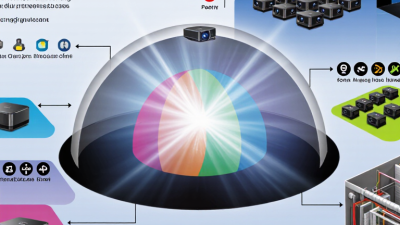
Fulldome projection systems create immersive visual content across a curved dome screen. The system typically includes projectors, a projection surface, a media or rendering server, geometric warping and edge-blending software, tracking or control equipment, and synchronized audio.
Chart explanation: Pixel counts are calculated from the stated raster dimensions. Higher-resolution formats provide more image detail for large dome screens, while multi-projector systems may combine several projectors to cover the full hemisphere and maintain image brightness and uniformity.
China’s fulldome projection sector combines optical engineering, precision manufacturing, and large-scale system integration. Suppliers commonly develop projectors, curved screens, media servers, control systems, and installation services. This integrated approach can shorten communication between production and deployment teams.
Experienced manufacturers pay close attention to brightness uniformity, edge blending, color accuracy, and heat management. A dome may contain several projectors, so small alignment errors can create visible seams across the sky. Factory testing often includes long operating cycles, lens inspection, software compatibility checks, and vibration-resistant packaging. These details matter in science centers, planetariums, museums, and educational venues.
Price remains important, but it should not replace technical evaluation. Buyers should request measured brightness, native resolution, warranty terms, spare-part availability, and calibration procedures. Ask for installation records.
China’s manufacturing landscape is competitive and improving, yet it is not flawless. Some suppliers present strong specifications but provide limited field evidence. Others offer responsive engineering support but need better documentation. I have found that practical communication often reveals more than a polished quotation. A clear room layout, viewing distance, content format, and maintenance plan can prevent expensive changes later. The best supplier is not always the largest one. Reliability grows through transparent testing, realistic performance claims, and support after delivery.
A reliable fulldome projection system starts with accurate image geometry. Fisheye lenses spread content across curved surfaces, but they can create uneven brightness near the dome’s edge. Multi-projector layouts solve this problem through geometric warping and edge blending. Each projector must overlap precisely. Even a small calibration error can produce visible seams.
Real-time rendering is another key technology. It converts spherical content into images that match the dome’s viewing angle. High-refresh processing reduces motion blur during fast simulations or astronomical scenes. Genlock and frame synchronization keep projectors working together. HDR improves dark star fields and bright planetary details, although poor content mastering can still cause harsh highlights. According to AVIXA’s 2024 Industry Outlook and Trends Analysis, global professional audiovisual revenue is forecast to reach about 325 billion US dollars by 2028. This growth reflects stronger demand for immersive visual environments, not only larger screens. Equipment selection still requires practical testing.
Tips: Measure the dome before choosing lenses. Test a full-brightness scene, a dark scene, and moving content. Record brightness at the center and edges. Recheck calibration after thermal stabilization. This step is often skipped.
A dependable supplier should document optical performance, processing latency, color uniformity, and maintenance access. It should also provide measured results, not only simulated specifications. The Projection Technology Roadmap published by the International Electrotechnical Commission highlights the importance of standardized image quality evaluation. However, dome installations remain highly site-specific. A perfect laboratory result may fail inside a reflective, irregular venue. That limitation deserves honest review.
A reliable China fulldome projection supplier should be judged by its manufacturing controls, not only by impressive specifications. Experienced factories maintain documented procedures for optical assembly, circuit installation, software loading, and final inspection. Each projector should receive a serial number, test record, and traceable component history. This makes troubleshooting practical after installation.
Quality evaluation begins with measurable image performance. Inspectors should check brightness uniformity, edge focus, color consistency, geometric distortion, and blending accuracy across the dome. A calibrated camera and light meter provide stronger evidence than visual approval alone. Thermal testing matters too. Projection systems often operate for long periods, so airflow, fan noise, heat dissipation, and shutdown protection require careful verification. Electrical safety and electromagnetic compatibility testing should follow applicable market requirements.
Supplier audits reveal details that brochures cannot. Review incoming-material inspection, clean assembly areas, calibration schedules, aging tests, and packaging protection. Request a sample factory acceptance test before shipment. It should include continuous operation, restart testing, signal switching, and fault recording. No factory is flawless. Small alignment errors can still appear after transport, and field conditions may differ from laboratory results. A dependable manufacturer admits these risks and provides corrective procedures, spare parts, remote assistance, and clear warranty terms. Buyers should compare repeatability, documentation, and service response, not just purchase price. That is where quality becomes visible.
Top China Fulldome Projection Manufacturer Supplier
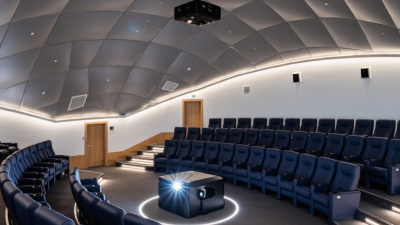
Fulldome projection supports planetariums, science museums, immersive classrooms, simulation centers, and cultural venues. Each application demands different brightness, resolution, viewing distance, and content compatibility. A planetarium may prioritize accurate star fields and smooth edge blending. A museum may need stronger brightness for frequent daytime visitors. Education spaces often require simple operation and reliable maintenance.
The broader projection market is growing steadily. Fortune Business Insights reported a global projector market value of about USD 14.56 billion in 2023, with continued growth expected through 2032. This figure includes many projection categories, so it should not be treated as a fulldome measurement. Still, it shows expanding demand for professional visual systems. When choosing a China supplier, inspect native resolution, ANSI lumens, lens options, refresh rate, blending accuracy, calibration software, and heat management. Request a live demonstration with your dome geometry. Product sheets can look perfect. Real installations are less forgiving.
Tips: Ask for measured brightness, not marketing brightness. Check edge-blending performance across the full dome. Review spare-parts availability and remote-support response times. Compare total ownership costs, including calibration, lamp or light-source replacement, electricity, and technician visits. A supplier with strong engineering records should provide installation drawings, test procedures, warranty terms, and documented acceptance criteria. I would also request references from similar venues, although references alone cannot prove long-term reliability. One overlooked issue is content workflow: confirm support for your playback format, frame rate, color settings, and synchronization method before signing.
| Evaluation Dimension | Typical Requirement | Relevant Applications | Recommended Selection Criteria | Verification Method |
|---|---|---|---|---|
| Projection Technology | Digital projection using laser or lamp-based light sources with edge blending and geometric correction. | Planetariums, science centers, museums, immersive classrooms, theme parks, and digital art venues. |
|
Request a live demonstration using the intended dome geometry and content format. |
| Dome Diameter and Geometry | Projection layout must match the dome diameter, viewing angle, surface curvature, and projector throw distance. | Small educational domes, fixed immersive theaters, large planetarium theaters, and portable inflatable domes. |
|
Compare the supplier’s optical simulation or layout drawing with the actual installation site. |
| Brightness | Brightness should be selected according to dome size, screen reflectance, ambient light, and the number of blended channels. | Educational presentations may require less light than public venues showing high-contrast films or live visualizations. |
|
Request an on-site or equivalent-dome measurement report using a recognized light-measurement procedure. |
| Resolution and Image Detail | The required pixel density depends on the audience distance, dome size, content type, and viewing angle. | Astronomical visualization, earth science, cultural heritage, engineering simulation, and cinematic fulldome content. |
|
Test star fields, fine text, planetary textures, and high-contrast geometric patterns. |
| Color Performance | Accurate and consistent color reproduction is important for educational visualization, astronomy, and branded experiences. | Planetarium shows, museum exhibits, scientific simulation, immersive advertising, and digital art installations. |
|
Inspect gradients, neutral grays, skin tones, saturated colors, and black-level transitions across blends. |
| Refresh Rate and Motion | Smooth motion and low image latency are required for fast camera movement, interactive content, and simulation. | Flight or space simulation, interactive education, gaming, live visualization, and high-motion fulldome films. |
|
Test rapid panning, rotating star fields, moving text, and interactive input response. |
| Edge Blending and Warping | Multiple projected images must combine into one continuous image without visible seams or geometric distortion. | Medium and large fixed domes, multi-projector theaters, and complex projection surfaces. |
|
Examine horizon lines, grids, circles, text, and uniform color fields across all blend zones. |
| Reliability and Operating Life | Continuous public operation requires stable thermal management, dependable electronics, and predictable maintenance intervals. | Public planetariums, museums, visitor centers, schools, and commercial immersive venues. |
|
Request operating-history references for comparable installations and review service records where available. |
| Content and Software Compatibility | The system should accept the media formats, playback workflows, and real-time data sources required by the venue. | Fulldome films, astronomy software, real-time 3D engines, interactive exhibits, and live data visualization. |
|
Test the customer’s own sample content before signing the final acceptance document. |
| Audio and System Integration | Immersive projection is normally paired with spatial audio, lighting, control systems, and building management equipment. | Planetariums, museums, theaters, immersive classrooms, and multimedia exhibition halls. |
|
Conduct a complete system test covering video, audio, control, lighting, and venue safety procedures. |
| Installation and Commissioning | Correct alignment, calibration, ventilation, power distribution, and structural preparation are essential for performance. | New-build theaters, retrofit projects, portable domes, and international installations. |
|
Use documented factory-acceptance and site-acceptance tests with measurable pass criteria. |
| After-Sales Service | Remote diagnostics, spare-parts support, firmware updates, and technical response are important for minimizing downtime. | Venues with daily public shows, seasonal attractions, traveling exhibitions, and educational networks. |
|
Include service-level requirements, escalation procedures, and spare-parts terms in the contract. |
| Supplier Qualification | A qualified supplier should demonstrate technical capability, project experience, quality control, and transparent documentation. | All fulldome projection projects, especially public-access venues and large multi-projector installations. |
|
Request references, technical drawings, compliance documents, sample contracts, and a detailed commercial quotation. |
| Total Cost of Ownership | The purchase decision should include equipment, installation, content integration, energy use, maintenance, calibration, and replacement costs. | Public institutions, commercial venues, schools, science centers, and long-term exhibition projects. |
|
Request a multi-year cost model with clearly stated assumptions and exclusions. |