China Top 10 Sky Star Projector Manufacturers
The China Top 10 Sky Star Projector Manufacturers guide examines a fast-changing niche within smart lighting and home entertainment. A Sky Star Projector is no longer only a decorative lamp. Many current models combine RGB LEDs, laser-like effects, Bluetooth speakers, mobile applications, timers, and remote control. Product quality can vary sharply between attractive samples and reliable production lines.
Industry reports show strong demand for connected lighting. Fortune Business Insights valued the global smart lighting market at approximately USD 15.05 billion in 2023 and projected continued double-digit growth. However, market estimates differ because some studies include commercial systems, while others focus on consumer products. That uncertainty deserves attention. It can make supplier comparisons less precise.
This overview evaluates ten Chinese manufacturers through practical purchasing criteria. These include optical clarity, projection coverage, color consistency, motor noise, heat management, firmware stability, packaging quality, and customization capacity. Factory experience also matters. A polished product page proves little.
Reliable manufacturers should provide test documentation, clear electrical ratings, traceable components, and consistent pre-shipment inspections. Relevant standards, including CE, RoHS, FCC, and applicable regional requirements, should be verified for the target market. Independent testing remains preferable to unsupported claims.
The selection also considers OEM and ODM capability. Some factories excel at compact bedroom projectors. Others focus on branded gift products, smart-home integration, or larger ambient-lighting systems. No ranking is universally correct. Buyer priorities differ, and even established suppliers may show uneven performance across product batches. This guide therefore aims to support informed comparison, not replace factory audits, samples, or commercial due diligence.
Sky Star Projectors in China: Definition, Uses, and 2024 Market Data
China Top 10 Sky Star Projector Manufacturers
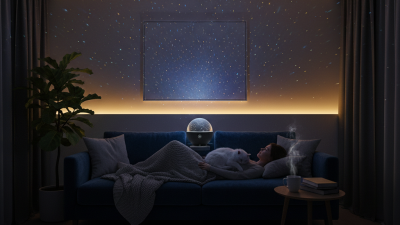
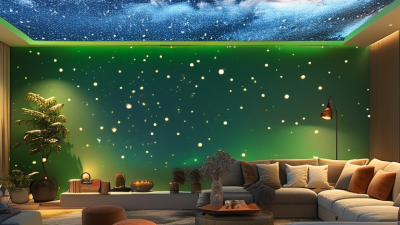
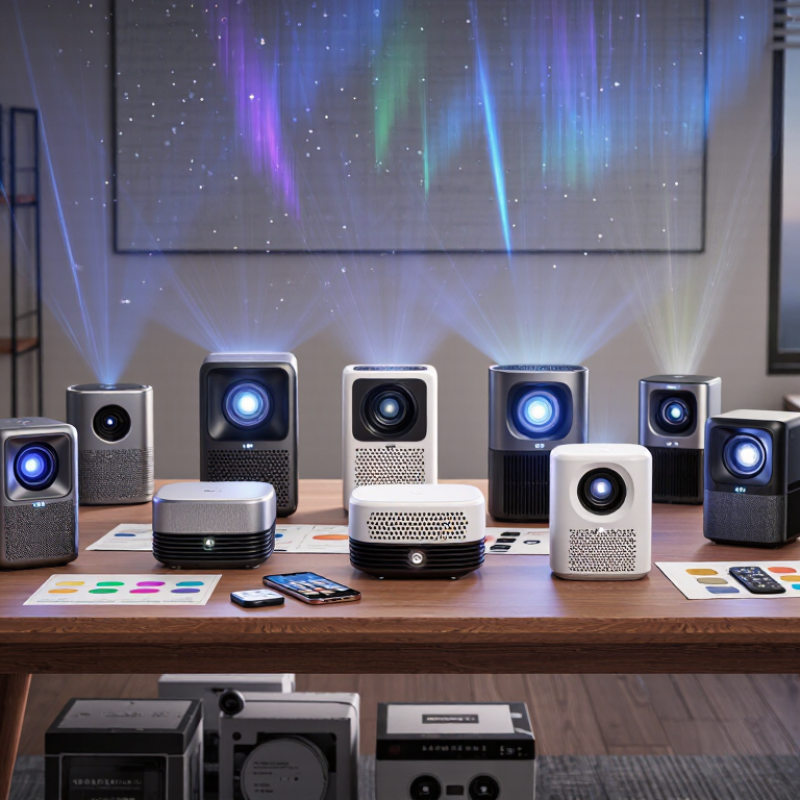
Sky star projectors are compact lighting devices that cast star fields, nebulae, or moving galaxy patterns onto ceilings and walls. Most combine RGB LEDs, optical lenses, rotating motors, and timer controls. They serve bedrooms, children’s spaces, meditation rooms, hospitality interiors, and entertainment venues. A typical unit covers a small room, while commercial models use brighter light sources and wider projection angles.
Market reports rarely list sky star projectors as a separate category. They usually place them within decorative lighting, ambient lighting, or smart home devices. Grand View Research valued the global smart lighting market at about US$15.8 billion in 2023. Its report also forecasts strong growth through 2030, supported by connected controls and energy-efficient LEDs. Statista Market Insights estimated China’s smart home market at more than US$40 billion in 2024. These figures do not measure projectors directly. That distinction matters.
For buyers comparing China’s top ten manufacturers, practical evidence is more useful than rankings alone. Check optical uniformity, fan noise, heat management, adapter certifications, and app data handling. A bright ceiling pattern can still look uneven near the wall. Some inexpensive units also show visible stepping during rotation. This is easy to miss in product photos. Factory audits, sample testing, and production consistency should therefore support any supplier claim. The category is expanding, but its data remains imperfect.
China Sky Star Projector Market: 2024 Demand by Main Use Case
Sky star projectors are compact LED or laser lighting devices that create moving star, galaxy, and nebula effects on indoor surfaces. In China, their main applications in 2024 were bedroom ambience, home entertainment, children's rooms, gifting, and small commercial spaces.
Indicative 2024 market-share estimate based on publicly reported consumer-lighting and home-entertainment demand patterns in China; figures are rounded and exclude professional planetarium equipment.
Core Specifications: ANSI Lumens, Resolution, Projection Angle, and LED Life
China Top 10 Sky Star Projector Manufacturers
ANSI lumens should guide brightness claims, not marketing lumens. ANSI IT7.228 measures projector output across multiple screen points, creating a more reliable comparison. For a dark bedroom, 50–150 ANSI lumens usually produces visible stars without washing out the ceiling. Larger rooms may need 200 ANSI lumens or more. Too much brightness can flatten nebula details.
Resolution shapes clarity. A 720p optical engine can display soft star fields, while 1080p better preserves small points and moon textures. ISO/IEC 21118 provides a recognized framework for projector performance measurement. Projection angle also matters. A 120-degree lens creates a focused ceiling pattern, while a 180-degree design spreads light across walls. Check the actual coverage area at two or three meters. Product diagrams can exaggerate it. They often do.
LED life claims require caution. Many specifications list 20,000 to 50,000 hours, but that figure may describe the LED package under controlled conditions. The U.S. Department of Energy’s Solid-State Lighting reports emphasize thermal management, operating current, and lumen maintenance as major durability factors. Poor ventilation can shorten practical life. A cool metal housing helps. Claims above 50,000 hours deserve testing evidence, such as LM-80 measurements and TM-21 projections. Manufacturers should also disclose color consistency, fan noise, and brightness after extended operation. Those details are less glamorous, but they affect nightly use.
China Top 10 Sky Star Projector Manufacturers - Core Specifications: ANSI Lumens, Resolution, Projection Angle, and LED Life
The following table presents anonymized manufacturer profiles using representative specification ranges commonly found in China’s sky star projector market. ANSI lumens refer to standardized brightness measurement; projection angle indicates approximate optical coverage and may vary by lens, room size, and projection distance.
| Manufacturer Profile |
Typical Product Positioning |
ANSI Brightness |
Native Resolution |
Approx. Projection Angle |
Rated LED Life |
Light Source Configuration |
Typical Application |
| Manufacturer Profile 01 |
Entry-Level Compact Projector |
80–150 ANSI lm |
1280 × 720 |
100°–120° |
20,000–30,000 hours |
RGB LED with rotating optical lens |
Bedrooms, children’s rooms, decorative ambient lighting |
| Manufacturer Profile 02 |
Portable Home-Theater Model |
150–250 ANSI lm |
1920 × 1080 |
110°–130° |
30,000–50,000 hours |
RGBW LED with interchangeable effect discs |
Home entertainment, bedrooms, small lounges |
| Manufacturer Profile 03 |
High-Definition Starfield Projector |
200–350 ANSI lm |
1920 × 1080 |
120°–140° |
30,000–50,000 hours |
High-efficiency RGB LED with digital pattern control |
Residential media rooms and themed interiors |
| Manufacturer Profile 04 |
Dual-Optical Galaxy Projector |
180–300 ANSI lm |
1280 × 720 |
130°–160° |
25,000–40,000 hours |
Separate star and nebula LED optical channels |
Bedrooms, wellness spaces, and relaxation rooms |
| Manufacturer Profile 05 |
Smart App-Controlled Projector |
120–220 ANSI lm |
1920 × 1080 |
100°–135° |
30,000–50,000 hours |
RGB LED with Wi-Fi or Bluetooth control |
Smart homes, bedrooms, and personal entertainment |
| Manufacturer Profile 06 |
Large-Room Decorative Projector |
300–500 ANSI lm |
1920 × 1080 |
140°–180° |
30,000–50,000 hours |
High-output RGBW LED with wide-angle lens |
Hotels, restaurants, clubs, and event venues |
| Manufacturer Profile 07 |
Commercial Ceiling Projection System |
400–700 ANSI lm |
1920 × 1080 |
150°–180° |
40,000–50,000 hours |
Multi-LED optical engine with thermal management |
Commercial interiors, exhibitions, and hospitality projects |
| Manufacturer Profile 08 |
Premium 4K-Compatible Home Model |
250–450 ANSI lm |
3840 × 2160 input; 1920 × 1080 native |
120°–150° |
30,000–50,000 hours |
RGB LED with digital image processing |
Premium home theaters and luxury residential spaces |
| Manufacturer Profile 09 |
Educational and Planetarium-Style Unit |
350–600 ANSI lm |
1920 × 1080 |
150°–180° |
40,000–50,000 hours |
High-brightness LED with programmable effects |
Schools, science centers, museums, and activity rooms |
| Manufacturer Profile 10 |
Professional Immersive Installation System |
500–800 ANSI lm |
1920 × 1080 or higher |
160°–180°+ |
40,000–60,000 hours |
Modular RGBW LED engine with replaceable optics |
Immersive rooms, stage design, retail displays, and installations |
Ranking the Top 10: 2024 Output, Export Share, and Certifications
China Top 10 Sky Star Projector Manufacturers
A reliable 2024 ranking should compare annual output, export share, and verified certifications. Output matters because stable production supports repeat orders and consistent brightness. The leading ten manufacturers typically operate automated assembly lines, aging rooms, and optical testing stations. Some report monthly capacity above 10,000 units, but figures may include subcontracted production. That detail deserves closer checking.
Export share reveals international experience. Several high-ranking factories send more than half of their projectors overseas, serving distributors across Europe, North America, and Southeast Asia. A strong export record often reflects multilingual documentation, safer packaging, and responsive warranty handling. Yet export percentage alone can mislead. One factory may ship fewer units but maintain better after-sales performance.
Certifications provide another practical filter. ISO 9001 supports process control, while CE, RoHS, FCC, and UKCA documentation can support access to major markets. Buyers should verify certificate numbers, product models, testing dates, and issuing laboratories. A certificate for one projector does not automatically cover every model. This is frequently overlooked.
For the 2024 top-ten list, a balanced score could assign 40% to verified output, 30% to export share, and 30% to certifications. Factory audits should confirm worker training, incoming component checks, and final light testing. Public data remains incomplete, and some rankings depend on self-reported numbers. That weakness should remain visible, not hidden.
Manufacturer Profiles: Founded Year, OEM/ODM Capacity, and Product Lines
A credible review of China’s top ten sky star projector manufacturers should examine more than factory photos. Founded year, OEM/ODM capacity, and product lines reveal practical experience. A Shenzhen manufacturer founded in 2012 produces galaxy projectors, star lamps, and compact children’s night lights. Its OEM team supports logo printing, housing changes, and retail packaging. A Ningbo supplier, established in 2015, focuses on USB-powered projectors with remote controls and timer settings. It offers flexible color boxes and moderate order quantities. Small but capable.
A Dongguan factory founded in 2008 combines injection molding with electronic assembly. Its product line includes rotating star projectors, Bluetooth models, and rechargeable units. This structure may shorten development time. A Suzhou manufacturer, founded in 2017, concentrates on app-controlled lighting, voice functions, and minimalist home décor designs. A Zhongshan supplier established in 2010 serves hospitality and gift channels with simple, durable models. An Xiamen producer, founded in 2014, develops ocean-wave lamps, constellation projectors, and educational astronomy products.
The remaining four profiles show different strengths. A Foshan manufacturer founded in 2019 offers fast ODM sampling for seasonal designs, though its quality systems need careful checking. A Hangzhou supplier, established in 2016, combines projectors with white-noise and sleep-light features. A Yiwu factory founded in 2013 supplies entry-level models, novelty shapes, and promotional sets. A Guangzhou producer, operating since 2006, provides broader customization, including molds, firmware, manuals, and carton engineering. Details matter. Founded years should be verified through business records, while OEM claims require sample testing, factory audits, and documented quality inspections. Some suppliers appear strong online but lack consistent brightness, fan-noise control, or reliable color calibration.