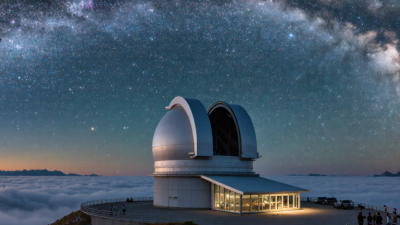
Top Observatory Telescopes for Viewing Stars?
Top Observatory Telescopes for Viewing Stars? The best choice depends on more than magnification. Aperture, optical quality, mount stability, and local conditions all shape what observers can actually see. A bright planet may look crisp through a smaller telescope, while faint star clusters often benefit from a wider aperture and darker skies. The view can change from one night to the next.
Astrophysicist Neil deGrasse Tyson has said, “The good thing about science is that it's true whether or not you believe in it.” That reminder fits telescope shopping: specifications matter, but real observing conditions matter too. Observatory Stars are not simply points to collect in an eyepiece. They are targets viewed through turbulent air, changing light, and equipment with practical limits. Dark skies help. Patience helps, too.
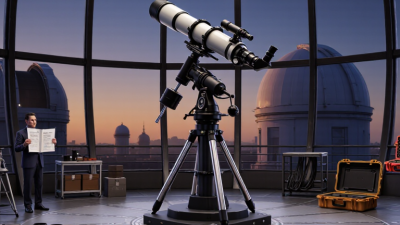
This guide compares observatory telescopes for stargazing, from beginner-friendly refractors to larger reflector designs. It explains how aperture, mount type, tracking, and portability affect the experience. It also considers what different setups reveal, including double stars, open clusters, and brighter deep-sky objects. Those examples are not promises; skies and skill vary. Even a capable telescope can disappoint under poor conditions. That is worth remembering. A specification sheet cannot show the feel of a steady mount or the frustration of a fogged eyepiece. The aim here is a useful, evidence-minded starting point—not a perfect ranking for every observer.
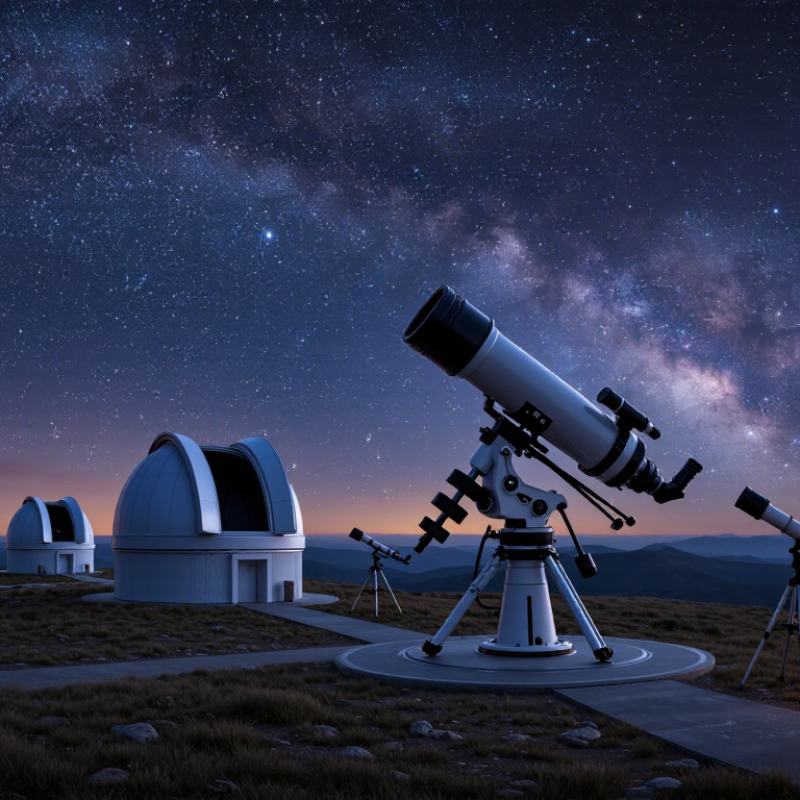
How Observatory Telescopes Reveal the Structure of Stars
An observatory telescope rarely shows a star as a detailed disk. From Earth, most stars remain tiny points of light. Their structure is inferred by collecting precise measurements over time. Large mirrors gather faint light, while sensitive instruments separate it by color. That spectrum carries clues about temperature, motion, and chemical elements.
Different observing methods reveal different layers of the story. Spectroscopy can show how gas moves across a star’s surface. Repeated brightness measurements may uncover stellar pulsations, which help astronomers estimate a star’s size and interior density. Interferometry combines light from separated telescopes, sometimes resolving details too small for one mirror alone. Adaptive optics can also reduce atmospheric blur, though it cannot remove every limit.
The evidence is powerful, but indirect. A telescope does not let us look through a star like a glass sphere. Instead, astronomers compare measurements with physical models and check whether the results agree. That process can leave uncertainty, especially for distant or rapidly changing stars. The picture is never complete. Still, a faint shift in a spectral line or a tiny rhythm in brightness can reveal how a star is built and changing.
Key Telescope Types Used for Stellar Observation
Reflecting telescopes are central to modern optical observatories. A primary mirror gathers faint starlight and sends it to cameras or spectrographs, which separate light into clues about a star’s temperature and composition. The European Southern Observatory reports that each Very Large Telescope unit has an 8.2-meter primary mirror. Large mirrors collect more light, but they need precise alignment and steady air.
Refractors use lenses and can deliver sharp views, though very large lenses become heavy and difficult to support. Catadioptric designs combine mirrors and lenses in a compact tube, useful where space is limited.
For scale, NASA lists Hubble’s mirror at 2.4 meters and the James Webb Space Telescope’s segmented mirror at 6.5 meters. Webb observes infrared light, helping astronomers study young stars and dusty regions.
Radio arrays add another perspective by detecting emissions some stars produce beyond visible light. Every wavelength helps. The trade-off is easy to miss: a larger aperture does not automatically mean a clearer view when atmospheric turbulence blurs the image.
Tips: Match the telescope to the target and wavelength. For visible starlight, prioritize aperture and stable optics; for detailed spectra, check that a spectrograph is available. Dark skies help. Even excellent equipment cannot replace careful focusing and patient observing.
Features That Make an Observatory Telescope Effective
An effective observatory telescope is more than a large tube. Aperture determines how much light it collects, while stable tracking keeps stars from drifting across the eyepiece. For a practical example, a 200-millimeter aperture gathers four times as much light as a 100-millimeter aperture, assuming similar optical efficiency. Mount rigidity matters, too: a shaky image can hide fine detail even under a clear sky. It is easy to overvalue magnification. On many nights, atmospheric turbulence—not the telescope—sets the limit.
Site conditions deserve equal attention. Falchi and colleagues’ 2016 study in Science reported that more than 80% of the world’s population lives under light-polluted skies, and more than 99% of people in the United States and Europe experience polluted night skies. A dark site can therefore reveal more than an expensive upgrade at a bright urban location. Effective observatories also manage dew, stray light, and temperature changes; a warm mirror may blur views until it cools. These details are unglamorous, but they shape real observing sessions.
Tips: Check the local sky brightness before choosing an aperture. Let optics reach outdoor temperature, and use a red flashlight to preserve night vision. Keep a simple observing log. I still find that patience beats pushing magnification.
Top Observatory Telescopes for Viewing Stars? - Features That Make an Observatory Telescope Effective
| Representative Telescope Setup |
Aperture |
Optical Design |
Focal Ratio / Focal Length |
Theoretical Rayleigh Resolution |
Approx. Light-Gathering Power |
Strengths for Star Viewing |
Key Practical Requirements |
| Compact refractor |
100 mm |
Refractor |
f/10 / 1,000 mm |
About 1.38 arcseconds |
About 204× |
Sharp stellar images, wide-field views, and low routine maintenance; well suited to bright double stars and star fields. |
A stable mount is important at high magnification. Long-focus versions can require more room to mount and store. |
| General-purpose reflector |
200 mm |
Newtonian reflector |
f/5 / 1,000 mm |
About 0.69 arcseconds |
About 816× |
Collects substantially more light than a small telescope and offers a useful balance for star clusters, double stars, and faint stellar targets. |
Optical alignment (collimation) may need checking. A mount should support the tube without vibration. |
| Long-focus compound telescope |
250 mm |
Schmidt-Cassegrain |
f/10 / 2,500 mm |
About 0.55 arcseconds |
About 1,276× |
Compact for its aperture, with a long focal length that is useful for close double stars and high-magnification observing. |
Allow time for the optics to reach outdoor temperature. Accurate tracking helps keep stars centered at high magnification. |
| Large visual reflector |
300 mm |
Newtonian reflector on a Dobsonian mount |
f/5 / 1,500 mm |
About 0.46 arcseconds |
About 1,837× |
Large aperture gathers abundant light for faint stars and crowded star clusters; the simple mount can provide a stable visual platform. |
Requires more space and careful handling. Collimation and a firm, level observing surface improve performance. |
| Research-class observatory telescope |
1,000 mm |
Ritchey–Chrétien reflecting telescope |
f/8 / 8,000 mm |
About 0.14 arcseconds |
About 20,408× |
Very large aperture supports detection of faint stellar targets and high-resolution imaging when observing conditions and instrumentation permit. |
Needs a substantial observatory mount, precise tracking, active operational support, and excellent atmospheric conditions. Ground-level seeing often limits resolution before the theoretical value is reached. |
Values describe representative configurations, not every telescope of each design. Theoretical resolution uses the Rayleigh criterion (138 ÷ aperture in millimetres). Light-gathering figures are geometric area ratios relative to a 7 mm pupil; central obstructions, optical transmission, and observing conditions reduce practical performance.
Leading Observatories for Viewing Stars
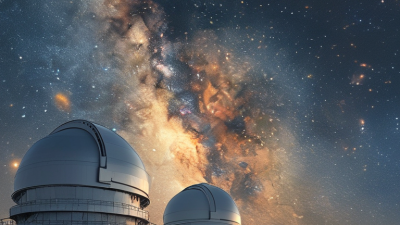
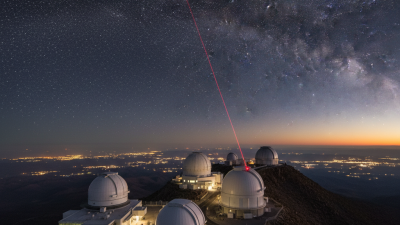
Leading observatories for viewing stars are often found in dry, high-altitude regions, where thin air and limited city light reveal faint details. Chile’s Atacama Desert is prized for exceptionally clear skies, while observatory sites on La Palma and Tenerife offer visitors a chance to learn about professional astronomy. Access varies: many research telescopes are not open for casual nighttime viewing, so check tour schedules before traveling. A public telescope may show Saturn’s rings more clearly than a distant research instrument you cannot enter.
Darkness matters. Choose a moonless evening, bring warm layers, and give your eyes at least twenty minutes to adjust. Red lights help preserve night vision, and a simple star chart can make constellations easier to find. Ask guides what the telescope will target; planets, star clusters, and nebulae each suit different conditions. Even a celebrated observatory cannot promise a perfect view. Clouds roll in, and expectations can outrun what the eyepiece reveals. I would leave room for that uncertainty, rather than treating a missed target as a failed night.
How Astronomers Choose Targets and Observing Conditions
Astronomers choose targets by balancing scientific value with the sky’s changing limits. A faint galaxy may need a dark, moonless night, while a bright star can remain observable under more modest conditions. They also check a target’s altitude: objects near the horizon pass through more atmosphere, which dims and blurs their light. Timing matters, too. A transit observation, for example, needs a continuous window, not just a clear patch of sky.
Seeing and transparency are different checks. Seeing describes atmospheric blur; transparency describes how much light reaches the telescope. The European Southern Observatory’s Paranal site-characteristics data report median seeing of about 0.81 arcseconds. That figure describes one site, not every observatory. Small details matter. A thin cloud can spoil a faint-target plan, while steady air may favor fine planetary detail. Astronomers compare forecasts with live conditions and adjust exposure times or switch targets. I would not treat a forecast as a promise; it can be wrong. Good planning leaves room for that uncertainty, and records the actual conditions so later measurements can be judged fairly.
Top Observatory Telescopes for Viewing Stars
How aperture and observing conditions shape a telescope’s ability to resolve fine detail.
The bars show the theoretical Rayleigh resolution limit at 550 nm, calculated for each aperture; smaller angular values indicate finer detail. The horizontal lines mark representative ground-based seeing levels of 0.5, 1, and 2 arcseconds. In practice, astronomers also consider atmospheric stability, transparency, target brightness, elevation, and moonlight when choosing what to observe.