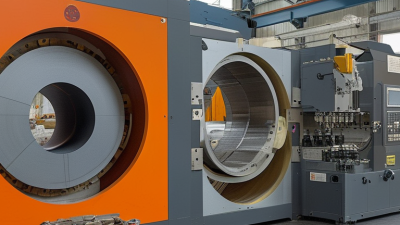
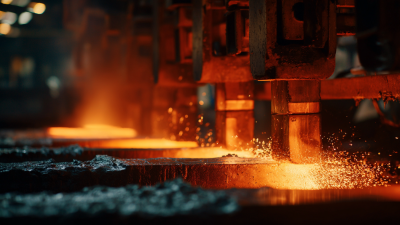
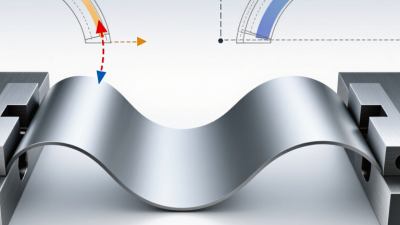
How to Choose China Best Double Arc Forming Machine?
Choosing the best Double Arc Forming machine requires more than comparing prices or advertised production speed. It demands a clear understanding of pipe diameter, plate thickness, steel grade, forming force, and required dimensional accuracy. The World Steel Association reported approximately 1.89 billion tonnes of crude steel production in 2023. This scale reflects continuing demand for efficient forming and welding equipment across infrastructure, energy, and transportation projects.
Relevant standards matter. API 5L and ISO 3183 provide important requirements for line pipe quality, testing, and traceability. A suitable machine should support stable forming pressure, accurate plate alignment, repeatable geometry, and reliable integration with submerged arc welding systems. Ask for production records, not only laboratory claims. Inspect the hydraulic system, forming rolls, control software, and maintenance access. Small design weaknesses can become expensive downtime.
W. Edwards Deming, a respected manufacturing quality expert, stated, “Quality comes not from inspection, but from the improvement of the production process.” His principle applies strongly to Double Arc Forming equipment. Quality begins with stable machine design and disciplined process control.
No machine is perfect. A lower purchase price may conceal weaker components, slower service, or limited spare-parts support. Buyers should compare total ownership cost, operator training, energy consumption, and long-term calibration needs. The best choice may not be the fastest machine. It should match your actual product range and factory conditions. This is where many evaluations become too optimistic. Real production trials often reveal problems that brochures omit. A careful selection process protects output, safety, and investment.
What Is a Double Arc Forming Machine and How Does It Work?
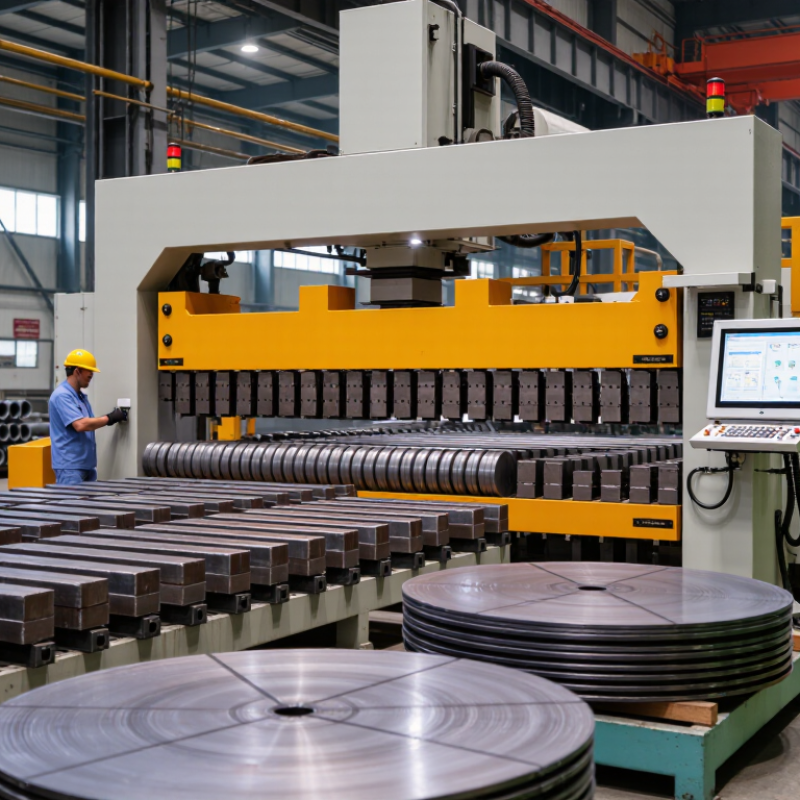
A double arc forming machine shapes metal sheets into two controlled curves, often across the width and length of a panel. The term is not perfectly standardized. Some suppliers use it for dual-radius roofing equipment, while others describe a two-stage roll-forming line. That difference matters.
The process usually starts with a decoiler and leveling unit. Roll stations then apply gradual pressure, creating the first arc without sharp creases. A second forming section produces the crosswise curve. Sensors check alignment, while a servo drive controls feeding speed. Hydraulic or flying-cut systems finish each panel at the required length. In practice, operators should inspect edge waves, springback, and surface marks after every setup. A beautiful curve is not enough.
The World Steel Association reported global crude steel production of about 1.89 billion tonnes in 2023. This scale highlights the need for repeatable forming and lower material waste. ISO 12100 also emphasizes risk reduction through machine design, guarding, and clear operating procedures. Still, published efficiency claims need caution; sheet thickness, alloy strength, tooling wear, and operator skill change results.
Tips: Ask for sample panels using your actual material. Check radius tolerance, changeover time, electrical standards, and spare-part access. Request measured results, not only catalogue figures. A small trial may reveal problems that a factory demonstration hides. Be skeptical. The cheapest line may cost more later.
How to Evaluate Machine Quality, Materials, and Forming Accuracy?
Choosing the best double arc forming machine requires more than comparing prices. Machine quality begins with the frame. A rigid steel structure reduces vibration during forming. Inspect welds, guide rails, bearings, and drive connections closely. Uneven welds can indicate weak quality control. The control cabinet should also look organized, with labeled wiring and protected components.
Material compatibility matters just as much. Ask which thicknesses, widths, and grades the machine can process consistently. A machine may form ordinary steel well but struggle with stainless steel or coated sheets. Request a live test using your own material. Watch the feeding movement, arc transition, and surface condition. Scratches, wrinkles, or edge distortion deserve attention.
Forming accuracy should be measured, not promised. Check the finished arc with templates, calipers, or a coordinate measuring device. Compare several workpieces from one production run. Repeatability is more valuable than a single perfect sample. I once focused too heavily on the first test piece, which was a mistake. Later samples showed slight angle variation. Ask for tolerance records, maintenance plans, operator training, and after-sales response times. A polished brochure is not proof. Real evidence comes from testing, records, and transparent communication.
How to Choose China’s Best Double Arc Forming Machine
Suggested evaluation weighting for machine quality, material compatibility, and forming accuracy
Forming accuracy should receive the highest priority because dimensional deviation and repeatability directly affect product fit and rework rates.
Material compatibility is also essential, particularly for machines processing different steel grades and thicknesses.
Machine quality includes frame rigidity, drive-system stability, control reliability, maintenance accessibility, and long-term operating consistency.
What Safety, Automation, and Maintenance Features Are Essential?
Choosing China’s best double arc forming machine requires more than comparing forming speed or purchase price. Safety features should be visible, testable, and easy for operators to understand. Look for fully enclosed moving areas, interlocked doors, emergency-stop buttons, and reliable overload protection. Light curtains can reduce risks near feeding and discharge zones. Proper grounding and clear warning labels also matter. A machine should stop quickly when a guard opens. Test this function before purchase, not after installation.
Automation should support stable production rather than add impressive decoration. A dependable PLC system, servo control, and position sensors help maintain consistent arc dimensions. Recipe storage can reduce setup errors when switching between product sizes. Touchscreen alarms should identify the fault, location, and recommended action. Production data can reveal repeated stoppages and uneven cycle times. However, a large screen does not prove intelligent control. I would ask for a live demonstration using material similar to yours.
Maintenance details often decide the machine’s real value. Choose accessible lubrication points, protected cables, modular electrical parts, and clear maintenance schedules. The forming rollers should be removable without dismantling half the machine. Check whether common spare parts are available locally. Ask how remote support works during a weekend failure. A small design weakness can become a costly delay. I would also inspect sample maintenance records, although these records may not show every past problem. Reliable selection comes from testing, documentation, and careful questions.
How to Select a Reliable Supplier and Calculate Total Cost?
How to Choose China’s Best Double Arc Forming Machine?
Selecting a reliable Chinese supplier requires more than comparing machine prices. Request a recorded trial using your actual steel grade, thickness, width, and target arc radius. Check forming accuracy at the beginning and end of the coil. Ask for inspection records, electrical schematics, spare-parts lists, and operator training details. A supplier should explain tolerances clearly, not hide behind “high precision.” Ask for proof.
The total cost includes the machine, tooling, packaging, freight, installation, training, energy, maintenance, downtime, and replacement parts. Use this simple calculation: total cost = purchase price + five-year operating expenses + expected downtime losses. The U.S. Department of Energy reports that compressed air can consume more than 10% of industrial electricity in some facilities. Therefore, compare motor efficiency, standby consumption, and air requirements, not only forming speed. Numbers expose gaps.
The 2024 World Manufacturing Production report from UNIDO highlights continuing pressure on manufacturers to improve productivity and resource efficiency. For a double arc forming machine, measure output per labor hour and acceptable pieces per shift. A cheaper machine may become expensive after frequent roller adjustments or slow changeovers. My first estimate would probably ignore small delays. That is the weak point. Ask the supplier for a twelve-month maintenance forecast, response times, warranty exclusions, and references from similar production environments. Verify every claim through a sample test and an independent pre-shipment inspection.