Inquiry
Form loading...
China Top Astronomy Dome Manufacturer for Global Buyers begins with a practical question: what makes a dome reliable under real skies? Buyers need more than a polished shell. They need accurate rotation, quiet motors, weather resistance, precise alignment, and responsive technical support. A small design error can become visible when a telescope tracks Jupiter at midnight.
Recent market research supports this demand. Grand View Research’s Planetarium Market analysis forecasts continued global growth through 2030, driven by science education, public observatories, and immersive visitor experiences. The International Dark-Sky Association also cites research showing that more than 80% of the world’s population lives beneath light-polluted skies. This makes controlled astronomical viewing increasingly valuable. However, market figures vary between reports. The sector is not perfectly transparent.
An Astronomy Dome manufacturer in China must therefore demonstrate more than production capacity. Material traceability, factory testing, load calculations, installation records, and after-sales response all matter. Buyers should request these details before comparing prices. As astronomer Neil deGrasse Tyson said, “The universe is under no obligation to make sense to you.” A professional dome should help observers study that universe with less mechanical uncertainty.
Experience remains essential. A coastal observatory needs different sealing from an inland school. A research facility demands tighter tracking accuracy than a hotel attraction. Some product pages simplify these differences too much. That is a weakness worth acknowledging. The strongest global suppliers combine engineering discipline, export experience, and honest consultation. Their domes should protect delicate instruments while creating a clear, memorable view of the night sky.
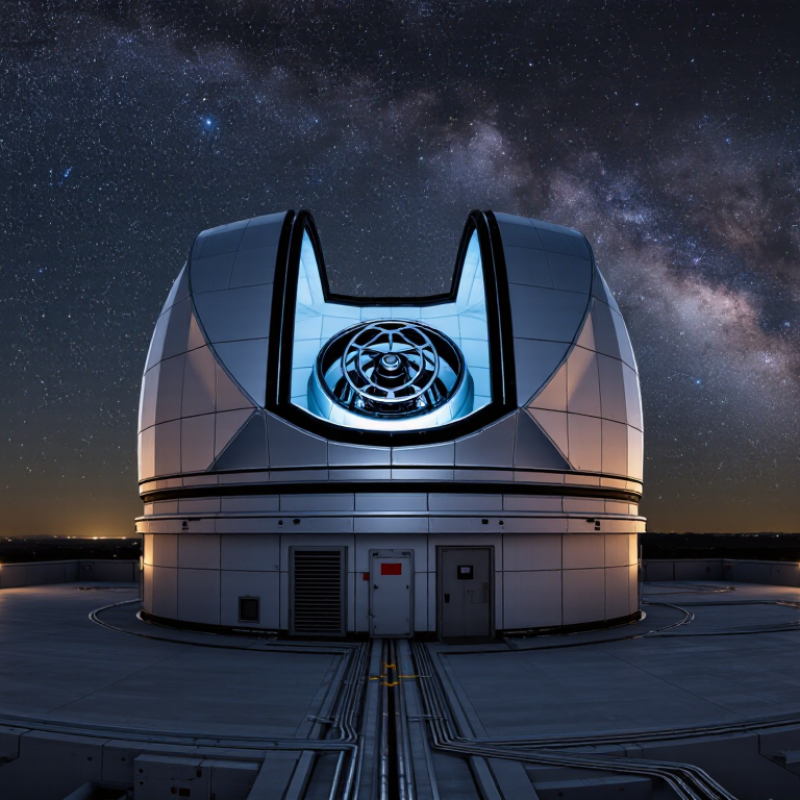
China’s astronomy dome manufacturing sector serves observatories, science centers, schools, and private research facilities. Many factories combine metal fabrication, control engineering, sealing, and optical integration under one project. A typical dome begins with site dimensions, latitude, equipment weight, and opening requirements. Engineers then develop structural drawings and rotation layouts.
Manufacturers commonly use galvanized steel, aluminum panels, insulated shells, and weather-resistant coatings. These materials help manage rain, wind, temperature changes, and long-term maintenance. Drive systems may include geared motors, limit switches, emergency stops, and manual release functions. Suppliers with field experience test rotation noise, shutter alignment, cable routing, and water drainage before shipment. Factory acceptance tests are useful, but installation conditions can still change the final result.
Global buyers should request load calculations, wiring diagrams, packing records, inspection reports, and clear installation instructions. Export teams may also support remote commissioning and replacement-part planning. However, not every supplier has equal engineering depth. Some quotations appear complete but exclude foundation work, control integration, or local electrical requirements. That gap matters. Buyers should compare technical scope, not only price. A careful manufacturer will discuss wind exposure, humidity, snow load, maintenance access, and future instrument upgrades openly. Small details often decide whether the dome operates smoothly after delivery.
| Category | Manufacturing Dimension | Common Industry Data or Capability | Buyer Considerations |
|---|---|---|---|
| Product Types | Astronomy dome configurations | Rotating domes with slit shutters, clamshell domes, fixed observation domes, and compact educational observatory enclosures are commonly produced for professional, educational, and amateur applications. | Select the configuration according to telescope size, observing frequency, ventilation requirements, and available structural support. |
| Dome Diameter | Typical project sizing | Small observatory domes are often designed below 4 m in diameter, medium systems commonly fall around 4–10 m, and larger custom structures may exceed 10 m. Final dimensions are project-specific. | Allow sufficient clearance for the telescope, mount movement, maintenance access, and internal airflow. |
| Structural Materials | Dome shell and frame options | Common solutions include glass-fiber-reinforced plastic, aluminum panels, galvanized or coated steel subframes, and insulated composite panels. | Material selection should reflect corrosion exposure, snow load, wind conditions, thermal expansion, transport weight, and maintenance plans. |
| Shutter Design | Sky access and weather closure | Single-slit, dual-panel, and clamshell shutter arrangements are used. Motorized opening and closing systems can be combined with limit switches and emergency stop circuits. | Check the clear aperture, shutter travel, drainage design, manual override, and safe-stop functions. |
| Rotation System | Azimuth movement | Typical systems use a circular rail or bearing arrangement driven by geared motors, friction wheels, chain drives, or rack-and-pinion mechanisms. | Confirm rotational speed, positioning repeatability, noise limits, drive redundancy, and compatibility with telescope-control software. |
| Control Integration | Automation and interlocks | Control panels may integrate dome rotation, shutter operation, position sensors, weather inputs, emergency stops, remote monitoring, and telescope-safety interlocks. | Define electrical voltage, communication interfaces, local control requirements, and the fail-safe response to rain, high wind, or power loss. |
| Weather Protection | Sealing and drainage | Weather-resistant designs typically use overlapping panel joints, gaskets or sealants, roof drainage paths, corrosion-protected hardware, and controlled shutter closure. | Wind speed, rainfall, snow depth, salt exposure, temperature range, and local building codes must be specified before engineering approval. |
| Thermal Management | Internal temperature control | Ventilation, passive airflow, insulation, reflective exterior coatings, and equipment-room separation are commonly used to reduce heat buildup and condensation. | Thermal design should limit dome-induced air turbulence and help the telescope reach thermal equilibrium before observations. |
| Fabrication Processes | Production and assembly methods | Manufacturing commonly involves CAD design, CNC cutting, metal forming, welding, surface treatment, composite molding or lamination, electrical assembly, and pre-shipment fit checks. | Request engineering drawings, material specifications, inspection records, and assembly instructions before production release. |
| Quality Verification | Factory and acceptance testing | Useful checks include dimensional inspection, weld and coating inspection, rotation and shutter testing, limit-switch verification, water-ingress checks, electrical safety checks, and factory acceptance testing. | Agree on inspection points, test procedures, acceptance criteria, documentation, and responsibility for corrective actions. |
| Compliance Framework | Codes and technical documentation | Projects may require structural calculations, electrical schematics, risk assessments, material certificates, installation manuals, and compliance with the destination market’s building and electrical regulations. | Compliance is location-specific; the importer, architect, structural engineer, and local authority may have additional requirements. |
| Customization | Engineering adaptation | Custom options may include diameter, slit width, shell finish, insulation, drive configuration, control protocol, access doors, ventilation, lighting, and mounting interface. | Provide telescope drawings, site coordinates, foundation details, local climate data, power specifications, and preferred control architecture. |
| Logistics | Export packaging and installation | Large domes are normally divided into transportable sections or panels. Export preparation may include labeled components, moisture protection, reinforced crates, spare parts, and installation documentation. | Confirm package dimensions, gross weight, delivery terms, unloading equipment, site access, local installation support, and spare-parts availability. |
| Project Workflow | Typical procurement stages | Requirement review → preliminary design → site and load confirmation → technical quotation → detailed engineering → manufacturing → factory testing → shipment → installation and commissioning. | A complete technical specification reduces redesign, installation delays, compatibility issues, and unexpected site costs. |
Note: The ranges and capabilities above describe commonly used astronomy-dome manufacturing practices. Structural loads, dimensions, electrical requirements, weather resistance, and compliance obligations must be verified for each project and destination country.