Inquiry
Form loading...

How to Choose the Best Astronomy Dome for Your Observatory?

Choosing an Astronomy Dome is not simply a matter of matching its diameter to a telescope. The enclosure affects wind exposure, thermal stability, equipment access, and the hours available for observing. Small design choices matter. A narrow shutter can restrict the usable sky, while poor ventilation may leave warm air shimmering above the telescope. These issues become especially clear on cold nights, when the dome cools faster than the instruments inside.

Site conditions deserve equal attention. NOAA’s 1991–2020 U.S. Climate Normals provide local temperature, precipitation, and wind records that can help guide material, ventilation, and weather-sealing decisions. For sky quality, Falchi and colleagues’ 2016 study in Science estimated that more than 80% of the world’s population lives under light-polluted skies. A dome cannot remove that glow, of course, but its opening direction and observing position should account for nearby lights and the local horizon. Check the data for your specific site.

Compare more than price and appearance. Review shutter clearance, rotation accuracy, wind ratings, condensation control, maintenance access, and compatibility with the mount. Ask manufacturers for documented performance figures and examples from observatories in similar climates. A product specification is useful, but it cannot fully predict how a dome will behave on your ridge, in your humidity, or beside your equipment. That uncertainty deserves honest attention. The best choice is the one that protects the instrument while supporting practical, repeatable observing.
How to Choose the Best Astronomy Dome for Your Observatory?

Determine Your Observatory’s Scientific and Site Requirements

A dome should fit the science, not just the telescope. List the instruments, their combined weight, required field of view, and access needs before comparing sizes. Check that the opening clears the telescope at planned pointing angles, including near the horizon. A narrow slit can quietly limit useful observations.

Measure the site after dark. Falchi and colleagues’ 2016 global atlas, published in Science Advances, estimated that more than 80 percent of the world’s population lives under light-polluted skies. Treat that figure as context, not a local forecast. Record sky brightness on several clear, moonless nights, and note nearby roads, buildings, and seasonal lighting. Small details matter. A bright parking lot can spoil an otherwise promising site.

Weather and ground conditions shape the enclosure, too. NOAA’s 1991–2020 U.S. Climate Normals provide monthly temperature, precipitation, and snowfall records for local planning. Compare those records with wind exposure, humidity, drainage, and expected snow loads; then consider thermal control, ventilation, and corrosion-resistant materials. Check access for installation and maintenance, not only for the telescope. Measure twice. A short site survey cannot capture every microclimate, so leave room for uncertainty in the design.
Compare Astronomy Dome Types and Structural Designs

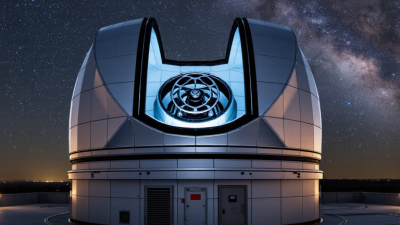
A rotating slit dome shields a telescope from wind and weather while its aperture tracks the sky. It needs a strong circular track, reliable drive motors, and careful balancing; small alignment errors can cause vibration. A clamshell opens widely, offering clear access and fast cooling, but its large moving panels need secure supports and dependable closures. A roll-off roof is simpler and often suits compact observatories, though it offers less protection when open.

Scale matters. The European Southern Observatory’s VLT technical specifications list four 8.2-metre primary mirrors, illustrating the demands placed on large telescope enclosures. Smaller facilities may not need that level of structure, but local wind, snow, and temperature swings still matter. Check site-specific design loads against current engineering guidance, such as ASCE 7, and compare how each dome handles heat buildup, maintenance access, and emergency closure. A dome can be structurally sound yet awkward to operate; that detail is easy to underestimate.

Tips: Ask for measured wind-load ratings, track tolerances, and service access drawings. Test the opening mechanism in cold conditions, if possible. The neatest design is not always the easiest to maintain.

Select the Dome Size, Materials, and Rotation System

Choosing an astronomy dome begins with the telescope, not the building footprint. Measure the instrument at its widest point, including cameras and cables. Then check that it can point toward the horizon without striking the walls or slit. Measure twice. A compact dome may work today but feel cramped after an equipment upgrade. Leave room for safe movement, a small work surface, and future accessories. The slit should frame the telescope’s full working range, with enough clearance for tracking. These details are easy to underestimate.

Material choice affects maintenance and observing comfort. Fiberglass resists moisture and needs relatively little upkeep, while aluminum is light but may need careful corrosion protection. Insulated panels can reduce temperature swings, though insulation alone cannot prevent condensation. Check how the structure handles local wind, rain, and temperature changes. Small details matter. Ask for documented load ratings and clear maintenance requirements rather than relying on appearance.

The rotation system should move the dome smoothly and keep its opening aligned with the telescope. Compare manual and powered systems, considering noise, speed, control compatibility, and access to replacement parts. A quiet drive matters during long exposures. Check how the system behaves during a power interruption, and whether it has a practical manual override. It is tempting to choose the fastest option, but reliability and simple servicing may matter more. Leave some budget for installation and alignment; the dome’s specifications do not guarantee an easy fit on site.

How to Choose the Best Astronomy Dome for Your Observatory?

Compare dome diameters by their calculated circular floor area to estimate the space available for your telescope and equipment.

How to use this chart: Floor areas are geometric estimates calculated as π × (diameter ÷ 2)². Choose a diameter that leaves sufficient clearance for the telescope, mount, and access; actual usable space depends on the observatory layout. When comparing materials, consider weight, insulation, weather resistance, and maintenance. For the rotation system, check load capacity, smooth operation, and alignment with the telescope.

Assess Weather Protection, Ventilation, and Equipment Access

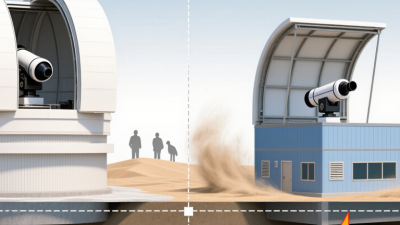
A dome must keep wind-driven rain and dust away from the telescope, not merely look sealed on a clear day. Check the door, shutter edges, and roof joints for overlapping seals that compress evenly. Look for drainage paths around the base, since standing water can find small gaps over time.

Water finds seams.

After a storm, inspect the interior for damp patches or condensation before powering equipment.

Ventilation helps control heat and moisture, especially when daytime temperatures rise inside the enclosure. Warm, damp air can fog optics as the dome cools at night. Place vents to encourage gentle air exchange without directing dusty gusts across mirrors or lenses.

Air matters.

More openings can improve airflow, but they also create more points that need weather protection. That trade-off deserves a real site check.

Equipment access should fit the telescope, mount, and the people who maintain them. Measure the shutter opening against the instrument’s full movement, including cables and accessories. Check door width and ceiling clearance with the telescope parked in its largest configuration. A raised threshold may keep rain out, but it can also catch carts or trip someone carrying equipment.

Measure twice.

Allow room to reach controls and service parts without leaning over delicate optics.

Evaluate Installation, Maintenance, and Total Cost of Ownership

Choosing an astronomy dome starts with the site, not the catalogue. Measure the observatory opening, wall height, and clearance for nearby trees or equipment. Check how components will reach the roof; a narrow access road can add crane time and labor. Confirm the structure can carry the dome and its expected wind and snow loads. Installation details matter. Poorly aligned tracks or rushed weather sealing can create problems that are expensive to fix later.

Ask what routine maintenance involves before comparing prices. Can staff inspect the drive, seals, and drainage without special access equipment? Dust, moisture, and grit can wear moving parts, while cracked seals may let rain reach sensitive equipment. A simple inspection schedule helps catch small issues early. Keep service records and ask whether common replacement parts are readily available. The manual may make maintenance sound easy. Real conditions are messier.

Compare total ownership costs over the period you expect to use the observatory. Include delivery, foundation work, electrical installation, commissioning, inspections, repairs, and likely downtime—not just the purchase price. A lower-cost dome may require more frequent service or longer repairs. Estimate conservatively, and note which figures are uncertain. A neat spreadsheet can still be wrong; local labor rates and weather exposure change the picture. Ask suppliers for written installation requirements, maintenance intervals, and warranty exclusions, then compare the answers side by side.

How to Choose the Best Astronomy Dome for Your Observatory? — Evaluate Installation, Maintenance, and Total Cost of Ownership

Planning comparison for a mid-sized, approximately 6 m diameter observatory dome. Figures are indicative budget ranges in USD and should be confirmed with project-specific quotations.

Dome Construction Typical Installed Cost Installation Considerations Maintenance Profile Expected Service Life Estimated 20-Year Total Cost of Ownership Best Suited To
Molded fiberglass composite $45,000–$75,000 Often supplied in prefabricated sections. Requires a stable support ring, careful alignment, and access for lifting equipment. Typical on-site assembly: about 3–7 days, excluding foundation work. Wash exterior surfaces periodically; inspect seals, fasteners, shutters, and drive components at least annually. Repair localized coating or seal damage as needed. Approximately 20–30 years with appropriate installation and routine care. $59,000–$117,000, including estimated maintenance and one allowance for drive or control-system replacement. Small to mid-sized observatories seeking relatively low routine upkeep and a prefabricated enclosure.
Aluminum-clad segmented dome $55,000–$95,000 Segmented construction can simplify transport, but assembly requires accurate fitting of panels, rotation components, and weather seals. Typical on-site assembly: about 1–2 weeks. Inspect panel joints, fasteners, seals, bearings, and drive systems annually. Check for corrosion around dissimilar-metal connections and maintain moving parts according to the supplier’s schedule. Approximately 25–35 years, depending on materials, exposure, and maintenance. $72,000–$139,000, including estimated maintenance and one allowance for drive or control-system replacement. Projects that value durable panel construction and can support a higher initial budget.
Painted structural-steel dome $45,000–$85,000 May require substantial lifting capacity and a robust support structure. Custom fabrication can increase lead time; allow about 1–3 weeks for on-site installation, depending on design and site access. Inspect coating, joints, seals, drainage, and moving components regularly. Exposed steel may need coating repairs or repainting, particularly in humid, coastal, or industrial environments. Approximately 20–30 years; structural life depends strongly on corrosion protection and upkeep. $79,000–$175,000, including estimated maintenance, periodic coating work, and one allowance for drive or control-system replacement. Custom designs, larger structures, or sites where local fabrication and heavy-duty construction are priorities.
Custom insulated composite dome $75,000–$130,000 Design coordination is typically more involved. Confirm the dome’s weight, rotation interface, ventilation, shutter dimensions, and compatibility with the observatory structure before fabrication. Installation commonly takes 1–3 weeks on site. Inspect exterior surfaces, seals, bearings, shutters, ventilation, and controls annually. Insulated designs may need additional attention to condensation control and airflow. Approximately 25–35 years, subject to materials and environmental conditions. $96,000–$183,000, including estimated maintenance and one allowance for drive or control-system replacement. Facilities with demanding environmental requirements, specialized geometry, or a need for a tailored enclosure.

Cost assumptions: The 20-year estimates include the installed dome, routine maintenance, and a planning allowance for one drive or control-system replacement; steel estimates also include periodic coating work. They exclude the telescope, foundation and major site preparation, building works, utilities, taxes, financing, and staff time. Actual costs vary with dome diameter, wind and snow loads, access, automation, local labor, and environmental exposure.